
Two of the most populous nations—China and India—are building hundreds of dams in a violently active geologic zone.

Two of the most populous nations—China and India—are building hundreds of dams in a violently active geologic zone.
Driven by the need for clean energy in its war on pollution and further accelerated by worldwide global warming fears, China is set to resume plans for a nuclear renaissance that has many sounding an alarm over safety concerns.
Projects are strong enough to withstand a rare “thousand year” earthquake, say China Three Gorges Corporation officials: “no need to worry”. Experts beg to differ.

CCTV, China’s state broadcaster, looks at the use of remote sensing to monitor the country’s vanishing “kidneys” — wetlands that provide a range of invaluable ecosystem services that have become seriously under threat from rapid urbanization and modernization.
This Huffington Post blog, by Peter Neill, founder and director of the World Ocean Observatory, looks at the global love affair with big dams and the perils of forcing water to acquiesce to political ambitions and national pride, and the sometimes dangerous results of doing so.
Construction of a controversial hydropower project that would flood one of the last remaining unaltered stretches along China’s famed Yangtze River has been blocked by the country’s environmental regulators — a surprise defeat in the face of an unrestrained dam-building boom that many opponents worry will cause an irreversible legacy of damage.
A Chinese court has agreed to hear a lawsuit filed by an environmental NGO seeking $US4.8-million in damages from an industrial polluter in Shandong province — thought to be the first public interest litigation for air pollution under China’s new environmental law. ChinaFile reports.
Is the ultimate dome preventing China’s skies from clearing a political one?
One year after Premier Li Keqiang declared war on pollution, the central government seems to be refraining from making any new promises on the matter this year, focusing instead on following through on all its previously set targets. South China Morning Post reports.
A smog documentary that went viral in China over the weekend and riveted the nation with its TED Talks meets Al Gore blend of compelling data and engaging instruction, managed to both survive China’s censors and get “the chop”.
Low water levels and stranded boats on the upper Mekong River — although, nothing new for a February in recent years — are once again stirring concerns over China’s dam-building program to the north. What is new is the apparent readiness of Chinese authorities to give an account of their actions to rectify the situation. The Lowy Interpreter reports.
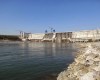
Late last year, Mu Lan, the editor of Probe International’s Three Gorges Probe news service in Chinese, followed the central leg of China’s massive South-to-North Water Diversion Project with his camera as it made its way from Hubei Province to Beijing, the project’s ultimate destination.
China’s new environmental protection law is not enough without robust implementation mechanisms, accountability regimes and institutional arrangements. This report for the science journal Nature identifies four gaps that will cause challenges for the new law.

Declaring “war on pollution” is just the first step, writes Elizabeth Economy in this terrific piece for ChinaFile on the need for Beijing to invest more in the fundamentals of environmental protection: the enforcement of regulations and the necessary human and financial resources to those on the front-line of clawing back blue skies and clean water for China.

This spotlight on mega-dams of note, profiled by International Rivers’ Peter Bosshard for The Guardian, lists more banes than boons with a quest Jawaharlal Nehru, India’s first prime minister, famously described as the “disease of gigantism.”



 Patricia Adams
 Dai Qing
 Fan Xiao
 Lawrence Solomon
 Mu Lan
 Probe International
 Lisa Peryman
 Probe Media
 Other News Sources
 Probe International