
Sam Cooper lays out why U.S. officials have treated British Columbia as a major CCP concern since at least 2017.


Sam Cooper lays out why U.S. officials have treated British Columbia as a major CCP concern since at least 2017.
New Delhi should use Beijing’s own scientists—and its record of dam disasters—to spotlight the risks of the Medog project.
Beijing’s spy chief focuses on the risk posed by AI to Party rule, not to humanity.
The State Department updated its travel advisory following Beijing’s detention of two more U.S. citizens.
Kenya’s problem is not poverty, Okiya Omtatah says—it is borrowed cash that never faces Parliament, and a legislature too compromised to ask where it went.
Censors erased viral footage while Chinese state media flooded platforms with official content.
Same flood, two stories: Nepal counted the dead; China hid the footage of its national gate vanishing.
The lives lost turned on who stood in the gorge and whether anyone warned them—not on a climate verdict: Roger Pielke Jr.
How the Party turned public factories into cadre fortunes—and called it a miracle.

Liberty does not die in a coup; it dies when the courts, press, and civic groups that once protected it are rewritten into instruments of “national security.”
Is it hybrid warfare?
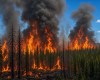
Leaders keep shelving the work of forest management. Why bother when you can just point at the sky, set a 2050 net-zero target, and look like a moral hero without lifting a […]
The unresolved questions after a reformist governor’s sudden death.

Why 190 million tonnes per annum of export capacity still can’t crack China and India’s sovereign energy systems.

At the exact moment Western economies rush to eliminate coal, China is deliberately scaling output by 25%, embedding it deeper into power, steel, chemicals, and national resilience.



 Patricia Adams
 Dai Qing
 Fan Xiao
 Lawrence Solomon
 Mu Lan
 Probe International
 Lisa Peryman
 Patricia Adams and Lawrence Solomon
 Other News Sources

