
The Africa Report looks at Mozambique’s economic crisis — a crisis that has still to reach its peak.

The Africa Report looks at Mozambique’s economic crisis — a crisis that has still to reach its peak.
Institutional weakness isn’t as exciting a topic as evil dictators or heroic protesters — but it’s far more important, writes former human rights lawyer Amanda Taub for Vox Media.
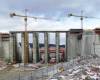
The Muskrat Falls hydroelectric project in Labrador needed a federal guarantee to get off the ground, which in itself testifies to its iffy economics, writes Konrad Yakabuski for the Globe and Mail. Now, he says, Newfoundland’s shrinking population faces paying for Muskrat Falls in more ways than one.
The crush of refugees, straining governments to the breaking point, now represent 4 per cent of Sweden’s 2016 budget.
Safe zone for migrants are far-fetched ideas with little prospect of success.
The chaos in Europe over migrants from the Middle East began with the Obama-promoted Arab Spring.
No country builds walls voluntarily — yet they are making a comeback for the same reasons they have been familiar features of civilized life for centuries.
The Greek government has only one sensible choice.
Research shows that contrary to the current greenwashing trend surrounding hydropower, hydroelectric dams are not the sustainable solution to the world’s energy needs that proponents make them out to be. They could even significantly worsen global emissions and global warming.
“No government should regulate birth, period.” Probe International Fellow and correspondent, Dai Qing, discusses China’s population-control policies over the years in this opinion piece for The New York Times.
Over the centuries, Jews have periodically been sought — and shunned — as immigrants.
Far from being marginalized, Russia is winning friends and trading partners around the world.
Bombed, breached, hacked … dams have a long history as weapons of war, seized on or attacked for their capacity to wreak massive havoc and suffering.
Talk of a new Cold War is not only overblown but counterproductive to the West’s security interests.
The EU and especially the U.S. gave Putin fertile ground with which to exploit the ensuing mayhem of months of orchestrated anarchy.



 Patricia Adams
 Dai Qing
 Fan Xiao
 Lawrence Solomon
 Mu Lan
 Probe International
 Lisa Peryman
 Patricia Adams and Lawrence Solomon
 Other News Sources

