
(June 12, 2013) As Canadian electric utility holding company Fortis Inc. awaits a decision on its proposed $1.5-billion buyout of New York’s CH Energy Group, a coalition of groups opposed to the takeover see Fortis’ past performance in Belize and British Columbia as a warning of what may lie in store for them. Probe International provides a round-up of reports on the controversy.
$45.5 million of Three Gorges relocation fund misused: audit
(June 8, 2013) China’s national auditing watchdog says millions of yuan intended for Three Gorges Dam migrants were misappropriated and used for projects that had nothing to do with relocation.
Funds misused in Three Gorges Project
(June 8, 2013) Funds intended for Three Gorges migrants were misappropriated while funds for geological disaster prevention and ecological protection were mismanaged, says China’s National Audit Office.
The problem with environmental impact assessments – continued
(June 3, 2013) News that an environmental impact assessment (EIA) for China’s tallest dam was approved last month by the Ministry of Environmental Protection is a signal that developers and politicians in China understand well the green-washing power of EIAs to move forward destructive projects.
Small dams an even bigger dam problem, say researchers

(June 1, 2013) New research from Oregon State University reveals small dams are no easier on the environment than their larger counterparts and often present more of a threat to their surroundings. The comparison between 31 small dams built on tributaries to China’s Nu River and four large dams proposed for the main stem of the same river, found the effects of the smaller dams were worse for nine out of the 14 characteristics studied. Habitat loss and damage at several dam sites show that the environmental effects of small dams are often greater, sometimes by several orders of magnitude. “A lack of regulation paired with a dearth of communication between small dam projects in China allows for the effects to multiply and accumulate through several dam sites,” say researchers.
Flow test for water project gets underway
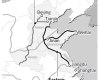
(May 31, 2013) The process of diverting water from the Yangtze River through the eastern route of China’s massive South-to-North Water Diversion Project began this week after 11 years since construction began. Although the water diversion intended for drought-prone cities in China’s arid northern regions “will enrich the water supply in the north, its impact on the ecosystem is irreversible,” said Ma Jun, an environmentalist.
A decade on, controversy still surrounds China’s Three Gorges Dam
(May 31, 2013) Agence France-Presse reports that despite problems, China’s Three Gorges dam will be joined by a wave of new hydropower projects over the next decade — mostly spread across the country’s mountainous and earthquake prone southwest. The ambitious plans have left some in China’s growing environmental movement feeling powerless. Probe International Fellow, activist and journalist Dai Qing, who spent time in prison for her opposition to the Three Gorges dam, says the country’s environmentalists “continue to oppose the hydropower plans” but “they will be built no matter what local people say.”
Tainted meal staple highlights lack of law enforcement
(May 29, 2013) Public pressure for transparency over pollution concerns has compelled authorities in China’s southern province of Guangdong to name the producers of rice tainted with cadmium, reports say.
China’s new dawn

(May 24, 2013) The new dawn of Chinese activism: organic, leaderless and technology-driven. This report by journalist Monica Tan looks at the rise of public protest in China, how activism has moved away from a select high-profile few to become a growing movement made up of ordinary people – ‘lao baixing’ – determined to stand up for their environment. Technology enables large masses of people to get the word out and to assemble at low risk: no one and everyone leads. Some see this grassroots’ movement as the road to democracy and accountability for China.
China’s electricity sector undisciplined by markets, distorted by Party
(May 24, 2013) The iron fist of government controlling China’s electricity sector is not only costing China’s power consumers dearly, it is also the cause of serious distortions in the country’s power markets, says a new study by one of China’s preeminent think tanks.
The landslide story
(May 22, 2013) Chinese experts in landslide and geohazard protection fear debris flows, triggered by an epic 2008 earthquake in Sichuan Province, may pose a threat to the region for two decades. A tremendous amount of loose material from the landslides is suspended on hillslopes, ready to be washed away by rain. The potential for ongoing landslides and secondary hazards, such as flooding and blocked rivers, they argue, warrants further investigation.
New documentaries take on the horrors of China’s labor camp system
(May 7, 2013) Two new documentaries released this month reveal more horrifying details about China’s notorious re-education through labor (RTL) system. Other recent exposés of systemic human rights abuses in the RTL have led to calls to scrap the long-contested practice entirely. China’s new leadership is reportedly reviewing it.
Never-ending, hidden rules
Famed Chinese journalist and environmentalist Dai Qing, on her 70th birthday, reflects on the words of Confucius, who said: “When you’re 70, do as you please, as long as it doesn’t break the rules.” Dai, however, decides she was born 2,500 years too late. “I embody the cultural atmosphere of the ‘People’s Republic,'” she says. “With all its hidden rules.”
China earthquake points to future risk sites
(April 30, 2013) Nature magazine reports that, while scientists agree that China’s deadly tremor at Ya’an (Lushan county) may hint at where future quakes will strike, they disagree on which seismic fault the next rupture is likely to occur.
Are dams triggering China’s earthquakes?
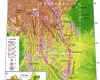
(April 29, 2013) Understanding the forces behind China’s magnitude-7 earthquake in Sichuan Province more than a week ago should sound warning bells. Patricia Adams digs deep into the country’s recent rash of earthquakes in southwestern China and finds the region’s seismic risk is increasingly man-made.



 Probe International