
(February 4, 2014) A “privileged and confidential” review by the Canadian Commercial Corporation (CCC), released to Probe International under the Access to Information Act, says graft-tainted engineering giant SNC-Lavalin has cleaned up its act. Reviews that lack rigour and independence, however, do not help the cause of rebuilding corporate reputations.
Jinping-I Dam impoundment linked to earthquakes
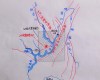
(February 3, 2014) Chinese geologist Fan Xiao investigates once again if the impoundment of a large dam reservoir triggered a series of earthquakes in the seismically active southwest region of China? Based on data collected by China Seismic Information (CSI), Mr. Fan says, ‘Yes’. Not only were the November 22, 2013, seismic events recorded in Sichuan, China not naturally occurring or isolated incidents, he says the region should prepare for stronger, “even destructive earthquakes” as a result of further impoundment.
USAID and Chinese state companies look to build white elephant
(January 24, 2014) USAID may join forces with Chinese state companies to build a controversial and uneconomic dam in the Democratic Republic of Congo.
Aid in Haiti’s void

(January 17, 2014) Haiti’s post-earthquake disaster housing projects are either empty and looted, or taken over by squatters and people unaffected by the 2010 earthquake. Why? “There is a void…there is no authority there.”
While Canadians endured hardships during recent storms, customers in UK got compensated
(January 7, 2014) To help its most vulnerable customers cope, one UK power company provided them with Christmas dinners as well as hotel accommodation, all at shareholder expense.
Chinese dam builders rush to Latin America
(January 7, 2014) China’s growing involvement in hydropower development in the region boosts clout but also leads to allegations of poor corporate responsibility. “There is great resistance to dam-building in Latin America and special worry about Chinese dams because of the opaque nature of China’s decision-making and poor quality in these dams,” says Pat Adams of Probe International.
Foreign aid: supporting dictators one at a time
(January 7, 2014) British foreign aid money is being used to prop up some of the most corrupt countries in the world.
Talk about following a bad example
(December 24, 2013) As Europe’s carbon market crumbles, China decides it’s time to set one up. On a side note, this has crazy corruption written all over it!
Chinese geologist links recent Badong County quake to Three Gorges Dam
(December 20, 2013) High-profile Chinese geologist Fan Xiao — and the author of several reports for Probe International — notes with interest the rush by China’s state media, and the country’s official seismological agency, to dismiss a link between the 5.1-magnitude Badong County earthquake on Monday and the Three Gorges Dam reservoir. A dismissal that runs contrary to common sense and the basic facts of seismic analysis, says Mr. Fan, who believes reservoir-induced-seismicity (RIS), triggered by impoundment of the massive dam, was likely behind the recent quake and could induce stronger earthquakes in the region.
5.1-magnitude earthquake strikes Three Gorges Dam region
(December 16, 2013) A 5.1-magnitude earthquake struck a mountainous and populous area of China’s Hubei Province today, 100 kilometres from the Three Gorges Dam site. Officials have been quick to reassure the public that the dam has remained intact and is operating normally after the event, which occurred at 1:04 p.m. in Enshi Tujia and Miao Autonomous Prefecture, Badong County. Aftershocks and quake-triggered landslides are expected. What more could there be to this story?
Why China’s renewables industry is headed for collapse
(December 10, 2013) Bankruptcies abound as China’s central planners struggle to keep its green industry from rotting.
Is foreign aid to Africa making matters worse?
(December 9, 2013) Travel writer and novelist Paul Theroux believes that decades of foreign aid to Africa has hampered the continent’s development.
December 2013 Campaign Letter
Contrary to Canada’s boy-scout image, Canadian companies have been among the Western world’s worst offenders.
SNC-Lavalin corruption case in India twists and turns
(November 26, 2013) A corruption trial in India involving Montreal-based engineering giant SNC-Lavalin has taken another turn.
From Chinese labor camp inmates to you: Help!
(November 20, 2013) How did Halloween decorations made by inmates at a notorious Chinese labor camp end up on US store shelves?



 Probe International