
(December 12, 2012) A new study published by Probe International reveals a dangerous relationship between dam reservoirs and seismic activity.
Aftershock from 2008 Wenchuan quake hits Sichuan
(December 4, 2012) Experts say the tremor that jolted Sichuan Province last weekend is an aftershock of the killer quake that struck the province in 2008, linked to the Zipingpu Dam.
4 workers missing after dam collapses in Cambodia
(December 2, 2012) Four workers are missing and presumed drowned after a Chinese dam project, in the throes of construction in western Cambodia, partially collapsed on Saturday.
China surveys Yangtze dolphin as extinction looms

(November 30, 2012) Chinese scientists have begun an expedition to count how many endangered finless porpoise remain in the Yangtze River. A similar survey in 2006 found only 1,800 of the animals, considered a national treasure, as well as a symbol of the mighty river itself and a reflection of the great waterway’s health.
New action guide targets Chinese dam construction
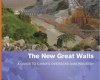
(November 29, 2012) As the most dammed country in the world and the largest exporter of dams abroad, China ranks as a hydropower-producing powerhouse with a wealth of experience that should inspire reassurance. The opposite is often the case, however, given China’s disregard for international social and environmental standards, both at home and overseas. A new action guide produced by the US-based environmental NGO, International Rivers Network, aims to help watchdogs of China’s ‘going out’ projects in their efforts to ensure safety and the rights of local communities affected by Chinese dam construction.
Why we should say no to CNOOC
(November 23, 2012) The proposed takeover of Calgary-based oil and gas producer Nexen by China’s state-owned oil giant CNOOC should be nixed by the Canadian government, says Probe International’s Patricia Adams. As instruments of the Communist Party, China’s state-owned enterprises (SOEs) are undisciplined by markets or the rule of law. Without subsidies, their rate of return on equity is negative. It would be impossible to stop them from distorting the Canadian economy, so Canada should just say no to CNOOC.
Sucking Beijing dry

(November 22, 2012) The construction of a massive water-guzzling, water-based theatrical extravaganza in China’s capital, has many questioning the wisdom of such a project in a city as desperately dry as Beijing. Nevermind ‘House of Dancing Water,’ say experts – including Ma Jun and Hu Kanping – the real leisure threats to the city’s parched reserves are golf courses and hot spring pools.
As Wen Jiabao departs, China’s dam plans to accelerate
(November 21, 2012) As populist Chinese Premier Wen Jiabao prepares to retire, China’s new leadership is already looking at an aggressive plan to ramp up hydro capacity, as part of its ambitious 2020 energy goals. Under Wen, whose common touch earned him the nickname ‘Grandpa Wen’, a number of projects were shelved, including a series of dams on Yunnan’s untouched, UNESCO-protected Nu River – this is now slated for construction. The following Reuters report, by David Stanway, looks at the prospect of a renewed dam push in a country already struck by development fever. A tough sell, he notes, as an increasingly affluent middle-class – also the drivers of China’s consumption boom – push back against China’s “growth at all costs” economic model.
Climate change a dam smokescreen?

(November 20, 2012) Poyang, China’s largest freshwater lake, is experiencing a dramatic drop in water levels as a result of drought exacerbated by the effects of ongoing climate change — a dry-up that began in earnest in 2003, according to a report published by China’s state-run Xinhua news agency earlier this year. What the report doesn’t acknowledge is that 2003 also coincides with the year reservoir filling began at the Three Gorges mega-dam 500-km upstream of Poyang, on the Yangtze River. Responding separately to Xinhua’s claims, noted Chinese geologist and environmentalist Fan Xiao points to operations at the dam, as well as rapid development of the Yangtze’s upper reaches, as the culprits behind the distressing changes Poyang and other Yangtze tributaries are experiencing: expect worse, he warns, but not because of climate change.
Water: The next challenge for China’s new leaders?

(November 20, 2012) China’s new leadership faces a number of challenges as the country enters an economic slowdown after decades of economic boom. One of the most pressing obstacles to its continued growth is water, and the lack of it. A report by Geoff Hiscock for CNN warns that China’s water vulnerability makes the country less able to withstand shocks like inflation, droughts or other natural disasters. Unless steps are taken to overhaul its water usage and supply and green its industrial operations, Hiscock says, “China risks social dislocation that could undo much of its progress.” The following report by Olga Khazan for the Washington Post provides a rundown of the water stresses China’s changing of the guard will inherit.
Despite the best of famous intentions

(November 13, 2012) A new documentary asks whether celebrity-led crusades to relieve poverty and hunger, such as Bob Geldof’s Live Aid mega-concerts in the 1980s, have actually made a difference.
Ningbo’s people power halts petrochemical plant expansion – for now

(November 2, 2012) The power of protest in China continues to gain momentum as yet another show of strength in numbers by protesters in Ningbo, an affluent port city of 3.4 million people, has halted a plan to expand petrochemical production in nearby Zhenhai.
Quake leaves Three Gorges Dam unfazed as reservoir reaches maximum capacity
(November 1, 2012) China’s Three Gorges Dam was not affected by a minor earthquake that struck early Wednesday in Hubei province, say officials, one day after the mega-dam’s mega-reservoir was filled to maximum capacity for the third time since its construction.
Mega-dams in China’s earthquake zones could have “disastrous consequences”
(October 31, 2012) “Earthquake Hazards and Large Dams in Western China,” the Probe International report authored by geologist John Jackson, has set China’s academic and industry circles astir. As the debate over Jackson’s findings heats up, the respected Caixin Media magazine, New Century Weekly, looks at both sides of the debate and the specific issues Jackson’s explosive report has raised.
No country for private houses

(October 26, 2012) The history of government property seizure in China reads like an appalling dystopian fiction. A new film, which debuted in New York on October 28, looks closely at the astonishing but all-too-true stories of individual citizens – survivors of this ongoing battle for property rights – who have been robbed of their homes, their lands, unconscionably beaten, tormented and forced to endure bizarre and cruel new realities as a result of a social-political ideology gone mad and corrupt officials and developers who will stop at nothing in their pursuit of power, privilege and gain.



 Probe International