
Canada must use Meng Wanzhou’s fight against extradition to the U.S. to send a clear message to China, and not the wrong one.
The real winner out of Meng Wanzhou’s hearing? Canada’s rule of law
The son and daughter of one of China’s most famous pro-democracy activists applaud the freedom Meng Wanzhou enjoys in Canada to make her case in court. Canada, they say, must use the opportunity to celebrate “the principles that animate those proceedings at every possible opportunity.”
Let’s tell the whole truth about ‘average’ global temperature rises

Opinion: Everybody is warming faster than average. Is all this just fake news? No, it’s all true. How is that possible? Because of the word ‘average’. Legal expert Andrew Roman goes behind the hot and getting hotter headlines.
The rise and fall of “good governance” promotion
Join Alina Mungiu-Pippidi, renowned politologist and one of Romania’s most outspoken and brave public figures, for the Seymour Martin Lipset Memorial Lecture on Democracy in the World this coming Wednesday, November 6, at the Munk School of Global Affairs & Public Policy.
‘If we give up on our husbands today, tomorrow our children will be ashamed of us’

How the spouses of lawyers arrested in the 709 Crackdown became activists.
Did our Prime Minister violate the Conflict of Interest Act?
Legal expert Andrew Roman digs deep into the bombshell report on the SNC-Lavalin affair issued by Canada’s Ethics Commissioner, Mario Dion, and criticisms of that report by Errol Mendes, a professor of constitutional and international law at the University of Ottawa. Who was right, who was wrong? Read on.
Why Canada needs to disentangle itself from a bullying China

Opinion: The likelihood that we are on the cusp of a new cold war must factor into our economic decision-making. In this opinion piece for the National Post, Patricia Adams of Probe International asks: “Would it have been prudent for Canada to cast its lot with the Soviet Union in the 1950s, when the geopolitical winds were blowing belligerent?”
A deadly 6.0 magnitude earthquake hits China’s big-dam country, Jinsha River valley
A 6.0-magnitude earthquake struck Sichuan province in southwest China late Monday night, followed by a series of aftershocks measuring over magnitude 5.0 reports China’s official Xinhua news agency. Historical data indicates the event is an unprecedented one for the area.
In Hong Kong, a publisher struggles to document Tiananmen’s Carnage

“Authors are afraid to publish. Publishers are afraid to continue doing business. Distributors are also afraid. Bookstores are diminishing and people there are afraid, too. So are the buyers, of course. It’s […]
See no evil: How Canada is bankrolling companies accused of bid-rigging, graft and human-rights violation
A Globe and Mail investigation of Export Development Canada (EDC) reveals “a pattern of secrecy and lax supervision”. Probe International’s Patricia Adams says EDC is an unaccountable “institution out of control”.
What does EDC do? A guide to ‘Canada’s secret trade weapon’
Here’s what you need to know about the most powerful financial institution you almost never hear about.
Deng Xiaoping in 1989
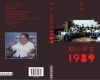
On the 30th anniversary of Beijing’s June 4, 1989, Tiananmen Square massacre, Probe International Fellow, environmental activist and China’s best-known investigative journalist, Dai Qing, delves deeper into the events leading up to and following the shocking and brutal crackdown that rocked a country on the brink of massive political reform and social change. A book that works as a retrospective documentary in affect, Deng Xiaoping in 1989 challenges the black-and-white dichotomies of “autocracy vs. democracy” and “government vs. students,” including correspondence from military generals who opposed the crackdown, soldiers’ experiences and eyewitness accounts of the “Tank Man,” the unidentified protester who stared down a column of tanks rolling through Tiananmen Square the morning after troops had opened fire on thousands of civilians – an iconic image of resistance since immortalized as a global symbol of pro-democracy protest.
Asset Recovery in OGP: Peer-learning on recovery, return and monitoring – lessons from the field
The 6th Open Government Partnership (OGP) Global Summit begins this week in Ottawa. Probe International’s Patricia Adams will moderate a discussion on identifying good practices and challenges in assets return and the promotion of peer-learning in assets recovery and monitoring. Organized by the Africa Network for Environment and Economic Justice (ANEEJ) and the MacArthur Foundation.
No sunshine needed: EDC’s response to our request for transparency
Export Development Canada responds to Probe International’s inquiry regarding allegations of bribery related to its support of SNC-Lavalin’s Matala Dam project in Angola. Not a reassuring read. According to EDC, we the […]
Export Development Canada investigation into SNC-Lavalin
The news EDC is to investigate allegations that its support of SNC-Lavalin’s Matala Dam project in Angola was used to pay bribes has us on pins and needles. How thorough will the investigation be? Will we ever learn the results?



 Probe International