
This spotlight on mega-dams of note, profiled by International Rivers’ Peter Bosshard for The Guardian, lists more banes than boons with a quest Jawaharlal Nehru, India’s first prime minister, famously described as the “disease of gigantism.”

This spotlight on mega-dams of note, profiled by International Rivers’ Peter Bosshard for The Guardian, lists more banes than boons with a quest Jawaharlal Nehru, India’s first prime minister, famously described as the “disease of gigantism.”
Increasing demand for natural catastrophe insurance has provided the world’s largest reinsurer, Munich Re, with its biggest market in the Asia Pacific region: China. But how will Munich Re classify disasters, such as earthquakes, in a country where seismic events are a growing subject of debate as to how many are natural and how many are man-made?
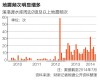
Beijing-based media group, Caixin, reports on Chinese geologist Fan Xiao’s research supporting a link between a 6.5-magnitude earthquake in China’s Yunnan Province in early August and the filling of dam reservoirs in the area. Several Probe International studies are cited.
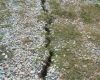
Another major earthquake has struck China’s Yunnan Province. Close to the epicenter of the earthquake are a number of hydropower dams. We asked Chinese geologist Fan Xiao: “Is there a link?”
Is China’s hydropower safe? Bloomberg’s Adam Minter cites Probe International’s investigations into the link between China’s dam-building and the surge in earthquakes.

Geologists express concerns that massive hydropower construction in the region may have contributed to seismic activity. Beijing-based media group, Caixin, interviews Chinese geologist Fan Xiao whose research supports a link between Yunnan’s 6.5-magnitude earthquake in early August and the filling of dam reservoirs in the area.
Analysis of rough data by Chinese geologist Fan Xiao, cited by the prominent scientific journal Nature, connects heightened seismic activity to August’s Ludian earthquake.

Seismic activity started to rise just as two giant reservoirs on the upper Yangtze were being filled with water. Nature magazine reports on the latest findings by Chinese geologist Fan Xiao, published by Probe International, on the link between mega-dams and seismic activity in China’s southwestern region.
In the wake of the 6.5-magnitude earthquake in China’s Yunnan Province on August 3 that claimed the lives of more than 600 people, Chinese geologist Fan Xiao has released new data that supports a link between that event and the region’s mega-dams.
If the findings of Chinese geologist and environmentalist Fan Xiao – and the author of several reports for Probe International – are accurate, they raise a serious question. This report by Quartz, a business news site from Atlantic Media, looks at some recent quakes in China linked to the filling of hydro-dam reservoirs.
The 6.5-magnitude earthquake that devastated southwestern China’s Yunnan Province on August 3 and killed nearly 600 is linked to the world’s largest and most intensive dam-building scheme on the Jinsha River, says renowned, independent geologist-explorer, Yang Yong.
“Why do earthquakes keep happening in that area?” In the wake of China’s 6.1 magnitude quake in Yunnan Province and a number of smaller quakes in the region, questions are once again being asked about the country’s rush to build big dams in its southwestern mountains, an area already vulnerable to seismic hazard.
(May 28, 2014) Another earthquake has struck the Three Gorges Dam reservoir region in central China’s Zigui County. No casualties have been reported so far and officials say the dam is operating normally. The 3.4 magnitude tremor which hit early Monday morning, some 23 km from the dam, follows two earthquakes of magnitude above 4.0 and hundreds of aftershocks which shook the same region in late March of this year. The events rank as significant according to Chinese geologist and environmentalist Fan Xiao, who says they are signals that the seismic threat posed by Three Gorges Dam is at its most critical stage now.
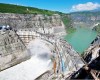
(April 9, 2014) Another earthquake has struck China’s seismically hazardous southwestern region in the same vicinity as one of the country’s mega-dams. Chinese geologist and environmentalist Fan Xiao says there is a “high probability” the Xiluodu dam, China’s second and the world’s third biggest hydropower power plant, triggered the quake.
(April 7, 2014) Chinese geologist and environmentalist Fan Xiao says the recent quakes that struck central China’s Hubei Province in Zigui county — “the first county of the Three Gorges Dam” due to its proximity to the project site — signal that the seismic threat posed by Three Gorges Dam is at its most critical stage now. Reservoir-induced seismicity (RIS) is most likely to occur within a few years, even a decade after initial filling of a dam reservoir to its highest level, due to the time it takes for reservoir water to penetrate deep into seismic faults and fissures before it triggers seismic activity. A 2010 study revealed seismic monitors around the Three Gorges Dam reservoir and in Hubei Province registered 3,429 earthquakes between June of 2003 (when inundation of the reservoir began) and December 31, 2009: a 30-fold increase in seismic frequency over the pre-dam period.



 Probe International