
Two of the most populous nations—China and India—are building hundreds of dams in a violently active geologic zone.

Two of the most populous nations—China and India—are building hundreds of dams in a violently active geologic zone.
A massive landslide this week is only the latest natural disaster critics believe the Three Gorges Dam has caused—even officials admit there have been 70% more landslides and bank collapses in the dam’s reservoir area since it was built 12 years ago. Lily Kuo for Quartz reports.
Projects are strong enough to withstand a rare “thousand year” earthquake, say China Three Gorges Corporation officials: “no need to worry”. Experts beg to differ.
This Huffington Post blog, by Peter Neill, founder and director of the World Ocean Observatory, looks at the global love affair with big dams and the perils of forcing water to acquiesce to political ambitions and national pride, and the sometimes dangerous results of doing so.

This spotlight on mega-dams of note, profiled by International Rivers’ Peter Bosshard for The Guardian, lists more banes than boons with a quest Jawaharlal Nehru, India’s first prime minister, famously described as the “disease of gigantism.”
Increasing demand for natural catastrophe insurance has provided the world’s largest reinsurer, Munich Re, with its biggest market in the Asia Pacific region: China. But how will Munich Re classify disasters, such as earthquakes, in a country where seismic events are a growing subject of debate as to how many are natural and how many are man-made?
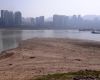
Images taken by Chinese geologist and environmentalist Fan Xiao during trips to the Three Gorges Dam reservoir area in 2012 and 2013, portray the dramatic changes that have taken place since the dam’s construction more than 20 years ago.
Twenty years after the completion of China’s monumental Three Gorges Dam, a new study by Chinese geologist Fan Xiao finds the mega-project’s impacts on his hometown of Chongqing, some 600 kilometres upstream, have been dramatic. Lost in the dam’s grand scale are the harsh consequences borne by the region’s environment and economy; its after-effects are felt most intensely by the individuals and communities struggling to adapt in the immense shadow of China’s largest public works effort since the Great Wall.
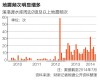
Beijing-based media group, Caixin, reports on Chinese geologist Fan Xiao’s research supporting a link between a 6.5-magnitude earthquake in China’s Yunnan Province in early August and the filling of dam reservoirs in the area. Several Probe International studies are cited.
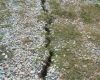
Another major earthquake has struck China’s Yunnan Province. Close to the epicenter of the earthquake are a number of hydropower dams. We asked Chinese geologist Fan Xiao: “Is there a link?”
Is China’s hydropower safe? Bloomberg’s Adam Minter cites Probe International’s investigations into the link between China’s dam-building and the surge in earthquakes.

Geologists express concerns that massive hydropower construction in the region may have contributed to seismic activity. Beijing-based media group, Caixin, interviews Chinese geologist Fan Xiao whose research supports a link between Yunnan’s 6.5-magnitude earthquake in early August and the filling of dam reservoirs in the area.
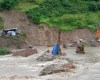
Geologists predict more frequent catastrophes in China’s Three Gorges Dam region, after landslides wipe out a hydropower plant. Fan Xiao and Yang Yong, the authors of several reports for Probe International, speak to thethirdpole.net about a disaster-prone region made more perilous by intensive hydropower development and call for new risk assessments to be carried out.
Analysis of rough data by Chinese geologist Fan Xiao, cited by the prominent scientific journal Nature, connects heightened seismic activity to August’s Ludian earthquake.

Seismic activity started to rise just as two giant reservoirs on the upper Yangtze were being filled with water. Nature magazine reports on the latest findings by Chinese geologist Fan Xiao, published by Probe International, on the link between mega-dams and seismic activity in China’s southwestern region.



 Patricia Adams
 Dai Qing
 Fan Xiao
 Lawrence Solomon
 Mu Lan
 Probe International
 Lisa Peryman
 Patricia Adams and Lawrence Solomon
 Other News Sources
