
(June 20, 2013) A new report says the global push to reduce greenhouse gases by building small dams, with the help of the Kyoto Protocol, is causing unanticipated and potentially significant losses to habitat and biodiversity.
Officials from China’s Three Gorges Corporation visit troubled U.S. lock

(June 19, 2013) Officials from China’s Three Gorges Corporation and Project Construction Committee (TGPCC) paid a visit earlier this month to the troubled U.S. Chickamauga Lock in Tennessee as part of an information sharing exchange organized by the U.S. Army Corps of Engineers (USACE) — responsible for the operation and maintenance of navigation locks on the Tennessee River. TGPCC, established by China’s State Council to oversee construction of the massive Three Gorges Dam project, has concerns regarding its own ship locks: some 733 cracks were reported to have appeared in the east and westbound channels of the Three Gorges dam’s five-step shiplock, along with a worrisome distortion that may have been caused by crustal plate movement, among other issues. The dam’s ambitious and intensely complex ship lift, slated for completion in 2015, has yet to be tested.
Uprooted

(June 14, 2013) Yang Yi’s surreal photo memoir of his childhood home, flooded for the construction of China’s Three Gorges Dam project, received special mention as one of New York’s Best Weekend Art Events in May when it debuted at Galerie Richard. Its run ends tomorrow, June 15.
The problem with environmental impact assessments – continued
(June 3, 2013) News that an environmental impact assessment (EIA) for China’s tallest dam was approved last month by the Ministry of Environmental Protection is a signal that developers and politicians in China understand well the green-washing power of EIAs to move forward destructive projects.
Small dams an even bigger dam problem, say researchers

(June 1, 2013) New research from Oregon State University reveals small dams are no easier on the environment than their larger counterparts and often present more of a threat to their surroundings. The comparison between 31 small dams built on tributaries to China’s Nu River and four large dams proposed for the main stem of the same river, found the effects of the smaller dams were worse for nine out of the 14 characteristics studied. Habitat loss and damage at several dam sites show that the environmental effects of small dams are often greater, sometimes by several orders of magnitude. “A lack of regulation paired with a dearth of communication between small dam projects in China allows for the effects to multiply and accumulate through several dam sites,” say researchers.
A decade on, controversy still surrounds China’s Three Gorges Dam
(May 31, 2013) Agence France-Presse reports that despite problems, China’s Three Gorges dam will be joined by a wave of new hydropower projects over the next decade — mostly spread across the country’s mountainous and earthquake prone southwest. The ambitious plans have left some in China’s growing environmental movement feeling powerless. Probe International Fellow, activist and journalist Dai Qing, who spent time in prison for her opposition to the Three Gorges dam, says the country’s environmentalists “continue to oppose the hydropower plans” but “they will be built no matter what local people say.”
The landslide story
(May 22, 2013) Chinese experts in landslide and geohazard protection fear debris flows, triggered by an epic 2008 earthquake in Sichuan Province, may pose a threat to the region for two decades. A tremendous amount of loose material from the landslides is suspended on hillslopes, ready to be washed away by rain. The potential for ongoing landslides and secondary hazards, such as flooding and blocked rivers, they argue, warrants further investigation.
China earthquake points to future risk sites
(April 30, 2013) Nature magazine reports that, while scientists agree that China’s deadly tremor at Ya’an (Lushan county) may hint at where future quakes will strike, they disagree on which seismic fault the next rupture is likely to occur.
Are dams triggering China’s earthquakes?
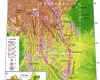
(April 29, 2013) Understanding the forces behind China’s magnitude-7 earthquake in Sichuan Province more than a week ago should sound warning bells. Patricia Adams digs deep into the country’s recent rash of earthquakes in southwestern China and finds the region’s seismic risk is increasingly man-made.
Could dams be causing China’s earthquakes?
(April 24, 2013) Another article exploring the brewing debate over the cause or causes of the April 20 Lushan earthquake reports that the quake may have been an aftershock of Sichuan’s 2008 earthquake disaster, which some experts believe was triggered by the Zipingpu Dam reservoir. This issue of “reservoir-induced seismicity” is fast gaining attention as China, the most dammed nation in the world, is particularly at risk to the phenomenon. A 2011 Chinese study, for example, found China’s massive Three Gorges Dam had triggered around 3,000 earthquakes and numerous landslides in the reservoir region, representing a 30-fold increase in seismic activity in the area.
Sichuan quake highlights dam risk
(April 24, 2013) In regions noted for geological instability, engineering projects built along fault lines are not only vulnerable, but may, in part, be to blame for earthquakes.
Shifting tectonic plates, aftershock, dam-related, or all three?
(April 22, 2013) Experts are debating whether the 7.0-magnitude earthquake that struck Sichuan province over the weekend was an aftershock of the region’s deadly 2008 Wenchuan earthquake – both quakes occurred along the same fault line. Some attribute Saturday’s event to natural movement in the earth’s crust but according to Fan Xiao, chief engineer at the Sichuan Bureau of Geology and Mineral Resources, the Wenchuan quake is also linked to the nearby Zipingpu Dam reservoir. Speaking to the Global Times, Mr. Fan said large reservoirs built on fault lines can induce earthquakes caused by the pressure of massive water volume on a fracture. “A reservoir with a capacity of over 1 billion cubic meters and a dam more than 100 meters tall would have a 30 percent to 40 percent chance of inducing an earthquake,” he said.
Sichuan earthquake may be aftershock of 2008 killer quake: Chinese geologist
(April 22, 2013) China’s construction of huge dams increases the probability of earthquakes, Fan Xiao warns.
Deadly earthquake in China may be aftershock of 2008 Wenchuan quake
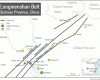
(April 21, 2013) The strong earthquake that struck China’s mountainous Sichuan province Saturday morning may have been an aftershock, says prominent Chinese geologist, Fan Xiao. The accumulation of stress had not yet been fully released, making this region a more dangerous area after the May 2008 Wenchuan earthquake.
On alert: RIS risk amid rash of earthquakes in China’s Sichuan-Yunnan region
(March 22, 2013) A new report, exclusive to Probe International, calls for urgent monitoring of China’s large dams in areas prone to seismic hazard. These areas may be at increased risk from dam reservoir-induced seismicity (RIS). Scientists have observed that reservoir impoundment may not only increase the risk of strong earthquakes, particularly in areas already vulnerable to high-intensity seismic activity, but may represent a more pronounced risk in the first few years after a dam is filled.
 Patricia Adams
 Dai Qing
 Fan Xiao
 Lawrence Solomon
 Mu Lan
 Probe International
 Lisa Peryman
 Probe Media
 Other News Sources


 Probe International