
The Yangtze River has been slated to accommodate yet another project in the name of “development” and “drought prevention”: the Dian Zhong Water Diversion Project, a 661-kilometer endeavour with some high hopes pinned to it.

The Yangtze River has been slated to accommodate yet another project in the name of “development” and “drought prevention”: the Dian Zhong Water Diversion Project, a 661-kilometer endeavour with some high hopes pinned to it.
Chinese authorities are hoping a large-scale rollout of hydropower can help to reduce toxic smog but, in addition to the high financial and environmental costs, many experts are skeptical that more hydropower means less coal.
China’s increasing financial and economic assertiveness suggests its star is only set to rise on the world stage and that has prompted some major swagger on the part of its leaders. Swagger the nation’s long-term view doesn’t warrant. Commentary by John Robson.
Mass protests are a growing fixture in China’s grassroots’ not-in-my-back-yard environmental justice movement. A lightning rod for public action concerns PX plants – chemical factories located elsewhere in the world that do not incite large-scale protests the way they do in China. Yet the Chinese government cannot convince citizens they are “no more harmful than a cup of coffee.”
Driven by the need for clean energy in its war on pollution and further accelerated by worldwide global warming fears, China is set to resume plans for a nuclear renaissance that has many sounding an alarm over safety concerns.
China considers new law aimed at crackdown on foreign NGO operations and funding of activities feared threatening to Communist rule. Probe International, named as one of several international foundations in a recent criminal investigation, told the New York Times: “From our perspective in Canada, it is perplexing that such activities [researching and writing articles and reports, and giving university lectures] would be considered illegal.”
China orders the closure of small plants in 10 polluting industries and a curb on the tapping of aquifers in an effort to reign in contamination of its water supply. Probe International Fellow, activist and journalist Dai Qing is quoted for this article by the Financial Times.
A Chinese court has agreed to hear a lawsuit filed by an environmental NGO seeking $US4.8-million in damages from an industrial polluter in Shandong province — thought to be the first public interest litigation for air pollution under China’s new environmental law. ChinaFile reports.
Is the ultimate dome preventing China’s skies from clearing a political one?
This in-depth, must-read looks at a spike in intolerance for activism in China, which, under President Xi Jinping, has culminated in a massive setback for the country’s human rights activists, faced with the most severe crackdown since the Tiananmen massacre in 1989. China Digital Times explores what happened and why the government is so threatened by the emergence of independent civic groups and both domestic and foreign NGOs.
One year after Premier Li Keqiang declared war on pollution, the central government seems to be refraining from making any new promises on the matter this year, focusing instead on following through on all its previously set targets. South China Morning Post reports.
A smog documentary that went viral in China over the weekend and riveted the nation with its TED Talks meets Al Gore blend of compelling data and engaging instruction, managed to both survive China’s censors and get “the chop”.
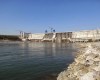
Late last year, Mu Lan, the editor of Probe International’s Three Gorges Probe news service in Chinese, followed the central leg of China’s massive South-to-North Water Diversion Project with his camera as it made its way from Hubei Province to Beijing, the project’s ultimate destination.
China’s new environmental protection law is not enough without robust implementation mechanisms, accountability regimes and institutional arrangements. This report for the science journal Nature identifies four gaps that will cause challenges for the new law.

Declaring “war on pollution” is just the first step, writes Elizabeth Economy in this terrific piece for ChinaFile on the need for Beijing to invest more in the fundamentals of environmental protection: the enforcement of regulations and the necessary human and financial resources to those on the front-line of clawing back blue skies and clean water for China.



 Probe International