
This in-depth, must-read looks at a spike in intolerance for activism in China, which, under President Xi Jinping, has culminated in a massive setback for the country’s human rights activists, faced with the most severe crackdown since the Tiananmen massacre in 1989. China Digital Times explores what happened and why the government is so threatened by the emergence of independent civic groups and both domestic and foreign NGOs.
“Under the Dome” finds its limits
A smog documentary that went viral in China over the weekend and riveted the nation with its TED Talks meets Al Gore blend of compelling data and engaging instruction, managed to both survive China’s censors and get “the chop”.
Russia’s rise
Far from being marginalized, Russia is winning friends and trading partners around the world.
Taking the long view
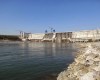
Late last year, Mu Lan, the editor of Probe International’s Three Gorges Probe news service in Chinese, followed the central leg of China’s massive South-to-North Water Diversion Project with his camera as it made its way from Hubei Province to Beijing, the project’s ultimate destination.
China: Update – Release of human rights defender Mr Huang Kaiping

After three months of ‘enforced disappearance’, Huang Kaiping, has been returned to his home in Beijing. Front Line Defenders reports.
China crushes intellectual freedom even after decades of successful market reforms

The brutal treatment of champions of freedom is a stark reminder that market reforms are not enough to serve as the foundation of a free society. Atlas Network reports.
Policy: Four gaps in China’s new environmental law
China’s new environmental protection law is not enough without robust implementation mechanisms, accountability regimes and institutional arrangements. This report for the science journal Nature identifies four gaps that will cause challenges for the new law.
Looking forward to the moment when you return: Zhou Qinghui to Huang Kaiping

As China continues its crackdown on reform-minded scholars and civil liberties, the wife of yet another detained member of the respected Beijing-based think tank, Transition Institute, has spoken out in an open letter circulated online. Reaching out to her husband, Huang Kaiping, in the only way she now can, Zhou Qinghui recounts in vivid voice their first meeting, as fifth graders, up until the current day’s events, cast in shadow by the question mark of an uncertain future under a repressive regime.
Silencing Guo Yushan

A US-based colleague of detained Chinese activist, Guo Yushan, reflects on Guo’s formal arrest earlier this month.
This could get complicated
Increasing demand for natural catastrophe insurance has provided the world’s largest reinsurer, Munich Re, with its biggest market in the Asia Pacific region: China. But how will Munich Re classify disasters, such as earthquakes, in a country where seismic events are a growing subject of debate as to how many are natural and how many are man-made?
Harsher laws will not curb incentives to pollute

Chinese environmentalists explain why the incentives that work in favour of pollution, rather than its prevention, will remain, despite new legal powers. Radio Free Asia reports.
China’s water revival
Chinese citizens and industry are both willing to do their part to help turnaround the country’s water crisis, according to a new survey, but they don’t see how without a mechanism that allows the government, industry and end users to work together. Could that missing mechanism be market discipline, rule of law and citizen empowerment?
A letter to my husband Guo Yushan: II

Twenty days after the first letter to her husband, detained legal activist and scholar, Guo Yushan, Pan Haixia posted another exquisitely written follow-up letter to him online. In the time in between, Pan writes she is determined to honour Guo’s zest for life by not isolating herself: “I don’t want you to criticize me for indulging in self-pity” and “it would be unreasonable for me to act half-dead” when loved ones have been so supportive. Pan’s mood has become increasingly reflective, drawing on wisdom gained in moments past, as she finds herself embracing the philosophy that, “we little people all have an ultimate freedom that no one can take away: the freedom to choose the attitude with which we face our destinies.” She remains hopeful Guo will return home.
Photo gallery: Astonishing changes in the life and environment of Chongqing

Images taken by Chinese geologist and environmentalist Fan Xiao during trips to the Three Gorges Dam reservoir area in 2012 and 2013, portray the dramatic changes that have taken place since the dam’s construction more than 20 years ago.
Astonishing changes in the life and environment of Chongqing: 20 years after the construction of the Three Gorges Dam: Fan Xiao
Twenty years after the completion of China’s monumental Three Gorges Dam, a new study by Chinese geologist Fan Xiao finds the mega-project’s impacts on his hometown of Chongqing, some 600 kilometres upstream, have been dramatic. Lost in the dam’s grand scale are the harsh consequences borne by the region’s environment and economy; its after-effects are felt most intensely by the individuals and communities struggling to adapt in the immense shadow of China’s largest public works effort since the Great Wall.
 Patricia Adams
 Dai Qing
 Fan Xiao
 Lawrence Solomon
 Mu Lan
 Probe International
 Lisa Peryman
 Probe Media
 Other News Sources


 Probe International