(March 4, 2014) With China’s economy operating under perverse incentives, China’s leaders, now assembled in Beijing, will be powerless to clean up its environment.
Jinping-I Dam impoundment linked to earthquakes
(February 3, 2014) Chinese geologist Fan Xiao investigates once again if the impoundment of a large dam reservoir triggered a series of earthquakes in the seismically active southwest region of China? Based on data collected by China Seismic Information (CSI), Mr. Fan says, ‘Yes’. Not only were the November 22, 2013, seismic events recorded in Sichuan, China not naturally occurring or isolated incidents, he says the region should prepare for stronger, “even destructive earthquakes” as a result of further impoundment.
Chinese dam builders rush to Latin America
(January 7, 2014) China’s growing involvement in hydropower development in the region boosts clout but also leads to allegations of poor corporate responsibility. “There is great resistance to dam-building in Latin America and special worry about Chinese dams because of the opaque nature of China’s decision-making and poor quality in these dams,” says Pat Adams of Probe International.
Chinese geologist links recent Badong County quake to Three Gorges Dam
(December 20, 2013) High-profile Chinese geologist Fan Xiao — and the author of several reports for Probe International — notes with interest the rush by China’s state media, and the country’s official seismological agency, to dismiss a link between the 5.1-magnitude Badong County earthquake on Monday and the Three Gorges Dam reservoir. A dismissal that runs contrary to common sense and the basic facts of seismic analysis, says Mr. Fan, who believes reservoir-induced-seismicity (RIS), triggered by impoundment of the massive dam, was likely behind the recent quake and could induce stronger earthquakes in the region.
All dried up
(October 12, 2013) This Economist report looks at the gravity of China’s water crisis, once summed up by Wang Shucheng, a former water minister as: “To fight for every drop of water or die: that is the challenge facing China.”
Deng Xiaoping’s double debt to the Chinese people
(September 10, 2013) On the dreadful night of June 4, 1989, when the students in Tiananmen Square were mowed down by the People’s Liberation Army, the path to another tragedy, the damming of the Yangtze, was laid, says Dai Qing, China’s most famous environmentalist and longtime advocate of freedom of speech.
Massive new dams remind China of human price of ‘tofu constructions’
(July 20, 2013) China is on the cusp of another dam-building binge. Nowhere is the aggressive dam push raising more eyebrows than in the country’s southwest. Last year, a report by the environmental group Probe International said of the 130 proposed dams on rivers in the region, nearly 50 per cent “are located in zones of high to very high seismic hazard.”
Are dams triggering China’s earthquakes?
(April 29, 2013) Understanding the forces behind China’s magnitude-7 earthquake in Sichuan Province more than a week ago should sound warning bells. Patricia Adams digs deep into the country’s recent rash of earthquakes in southwestern China and finds the region’s seismic risk is increasingly man-made.
Deadly earthquake in China may be aftershock of 2008 Wenchuan quake
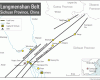
(April 21, 2013) The strong earthquake that struck China’s mountainous Sichuan province Saturday morning may have been an aftershock, says prominent Chinese geologist, Fan Xiao. The accumulation of stress had not yet been fully released, making this region a more dangerous area after the May 2008 Wenchuan earthquake.
Farewell, CIDA
(April 2, 2013) Now-abolished foreign aid pork barrel won’t be missed. Patricia Adams’ epitaph for CIDA.
Cyberwar and secrecy threaten China’s dams
(March 12, 2013) China may be the world’s biggest cyberspace aggressor, but security specialists say China’s computer-controlled infrastructure is more vulnerable to cyber-attacks and to malfunctioning domestic software than are Western systems. Read Patricia Adams’ piece in the Huffington Post on why China’s dams are vulnerable to both.
Corruption, bribery, baksheesh! Rooted in government
(February 6, 2013) Foreign Affairs Minister John Baird has announced get-tough-on-corruption amendments to the Corruption of Foreign Public Officials Act (CFPOA). Pat Adams, head of Probe International in Toronto, sees the announcement as Canada’s response to pressure from the Organization for Economic Co-operation and Development (OECD). “Canada is supposed to report back on deficiencies in its anti-corruption laws by March of this year. This appears to fix the deficiencies,” she says.
Press Release: 80,000 deaths from 2008 Chinese earthquake was likely not an act of God, says new study
(December 12, 2012) A new study published by Probe International reveals a dangerous relationship between dam reservoirs and seismic activity.
Why we should say no to CNOOC
(November 23, 2012) The proposed takeover of Calgary-based oil and gas producer Nexen by China’s state-owned oil giant CNOOC should be nixed by the Canadian government, says Probe International’s Patricia Adams. As instruments of the Communist Party, China’s state-owned enterprises (SOEs) are undisciplined by markets or the rule of law. Without subsidies, their rate of return on equity is negative. It would be impossible to stop them from distorting the Canadian economy, so Canada should just say no to CNOOC.
Sucking Beijing dry
(November 22, 2012) The construction of a massive water-guzzling, water-based theatrical extravaganza in China’s capital, has many questioning the wisdom of such a project in a city as desperately dry as Beijing. Nevermind ‘House of Dancing Water,’ say experts – including Ma Jun and Hu Kanping – the real leisure threats to the city’s parched reserves are golf courses and hot spring pools.
 Patricia Adams
 Dai Qing
 Fan Xiao
 Lawrence Solomon
 Mu Lan
 Probe International
 Lisa Peryman
 Patricia Adams and Lawrence Solomon
 Other News Sources