
Politically driven overfilling, structural flaws, and emergency discharges at several of the city’s reservoirs point to systemic failures in prioritizing water storage capacity over flood safety, says expert.

Politically driven overfilling, structural flaws, and emergency discharges at several of the city’s reservoirs point to systemic failures in prioritizing water storage capacity over flood safety, says expert.
Beijing’s July floods expose systemic failures in flood management and infrastructure prioritization.
The westward extension of the world’s largest water diversion project looks set to rock the “cradle of Chinese civilization”.

The Yangtze estuary’s saline tide has changed significantly since the impoundment of the Three Gorges Reservoir.

Experts fear Lintao’s dry-up is a sign of things to come. Probe International fellow and noted Chinese environmental journalist, Dai Qing, says China’s water scarcity and toxicity is the greatest danger facing her country today.

Journalist Sharron Lovell’s gallery of striking images portray the losing end of China’s massive water transfer scheme to alleviate some by taking from others.

Imagine waking up one day to be told your home and way of life is to be upended for the construction of a massive state water project?
This Huffington Post blog, by Peter Neill, founder and director of the World Ocean Observatory, looks at the global love affair with big dams and the perils of forcing water to acquiesce to political ambitions and national pride, and the sometimes dangerous results of doing so.
China’s massive South-to-North Water Diversion project, created to relieve a water crisis in the country’s parched north by tapping its more water-rich south, has produced an unexpected outcome: many cities in north China aren’t using the water. The Wall Street Journal looks at why.
According to Beijing’s bid to hold the 2022 Winter Olympic Games, the environmental impact of the Games will be “ecofriendly” and “sustainable”. Experts say otherwise: providing snow for events will be tough in a city where “it just doesn’t snow” and “a Martian-like plan” will be needed to create artificial cover. Conservationists worry about moves to build Olympic ski resorts in national parks and protected nature reserves. Ski resorts, meanwhile, require water and lots of it but Beijing doesn’t have water.
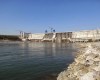
Late last year, Mu Lan, the editor of Probe International’s Three Gorges Probe news service in Chinese, followed the central leg of China’s massive South-to-North Water Diversion Project with his camera as it made its way from Hubei Province to Beijing, the project’s ultimate destination.
The constant stream of news coverage on China’s water crisis hasn’t dampened Beijing’s bid to host the 2022 winter Olympics and the production of a key, water-guzzling component of that bid: snow. The Economist reports.
A new study of China’s approach to water scarcity, co-authored by a consortium of British, Chinese, and American universities, has deemed the country’s massive South-to-North Water Transfer project an example of “pouring good water after bad”.
The Chinese government’s $97-billion pledge to clean up the country’s dire water situation has afforded foreign water firms market opportunities typically denied them in the past. Even so, roadblocks still prevail as China continues to put the breaks on importing the international expertise it needs to help with its water recovery.

Many of the more than 300,000 Chinese moved to make way for the country’s monumental South-North Water Diversion project have been left unemployed in leaking, shoddy houses, while few say they have […]



 Patricia Adams
 Dai Qing
 Fan Xiao
 Lawrence Solomon
 Mu Lan
 Probe International
 Lisa Peryman
 Probe Media
 Other News Sources
 Probe International