
A second revised edition of an iconic account of China’s June Fourth Incident launches with Probe International’s Patricia Adams on hand to commemorate the event.
By Probe International
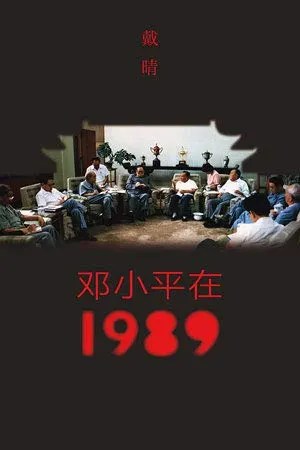
June 28 | New York: Today marks the launch of the second revised edition of an iconic account of the events that led to China’s Tiananmen Square tragedy, a deeper look at how those events played out, and the aftermath of what is officially known as the June Fourth Incident.
Now, 35 years since China’s dark spring of 1989, the country’s Communist regime has worked fiercely ever since to bury all memory of the deadly crackdown on its nascent pro-democracy movement. Deng Xiaoping in 1989 by China’s legendary historical investigative journalist, Dai Qing, represents a part of Dai’s life’s work to ensure access to the important aspects of China’s past escapes erasure.
The launch, hosted by the book’s publisher, Bouden House, in collaboration with the American Civil Archives, and the China Action Essay Editing Committee, was not attended by Dai Qing in person. Probe International’s executive director, Patricia Adams, however, was on hand to celebrate the occasion.
Her speech honouring Dai Qing is delivered in full below.
The second revised edition of Deng Xiaoping in 1989 is available to order here.
Patricia Adams’ Presentation at the Deng Xiaoping in 1989 (II) Press Conference on Friday, June 28, 2024, New York City
Thank you. My name is Patricia Adams.
I am the Executive Director of Probe International and a 30-year colleague of Dai Qing’s.
I want to thank David Rong for arranging this press conference and to say how happy Probe International is to have worked with Bouden House to arrange for the publication of the second revised edition of Dai Qing’s Deng Xiaoping in 1989, which was first released in 2019.
It will surprise no one to know that it has been a frustrating journey for Dai Qing, to be banned from publishing in China. We at Probe International have always urged her, as a Probe International Fellow, to continue writing and we have worked to find publishers for her work, especially this very timely book on the 35th anniversary of the Tiananmen massacre.
We hope with this second edition to extend the reach of readers inside China, and especially with the new chapter which focuses on Deng Xiaoping’s political personality: “Deng & His Legacy – an Iron Fist in a Velvet Glove”.
PI’s mission and Dai Qing’s is to let the citizens of China know what they deserve to know: what is going on in China now and the truth about the past. As Dai Qing has said in the past, her goal is to let the ordinary people speak their minds to express their will for their own material and spiritual needs, and to give the powerless a chance to express themselves.
Probe International’s History with DQ
Our first introduction to Dai Qing’s 40-year history of recording Chinese history was in 1989.
The Chinese government wanted to build the Three Gorges dam.
The Canadian government was eager to win contracts for Canadian firms to build the Three Gorges dam, so offered to pay for a feasibility study that could be given to international funders to justify their investment. The intention was to give the Three Gorges dam an international green light and that is exactly what the study did.
We were doing research on the problems with large dams at Probe International, and Three Gorges was the largest. So, we got a copy of the feasibility study using our Access to Information laws. Once we had it in hand, we asked a dozen world experts to critique it. They found serious flaws: sediment data was not reviewed, seismicity risks were glossed over, and most egregious, the Canadian engineers who completed the study recommended leaving 200,000 people in the active flood storage zone around the reservoir, which helped to minimize the resettlement costs in their cost-benefit calculations. We felt this violated their professional code of conduct to protect life and property.
While we were working on our book, we heard about an extraordinary event in China – the release of a critical book about Three Gorges by China’s most eminent scientists and engineers. That book was called Yangtze! Yangtze! Its chief editor was Dai Qing.
It was a monumental event. The Far Eastern Economic Review called Yangtze! Yangtze!‘s publication “a watershed event in post-1949 Chinese politics as it represented the first use of large-scale public lobbying by intellectuals and public figures to influence the governmental decision-making process.”
Dai Qing and her team of 40 journalists, scientists, editors, and artists distributed Yangtze! Yangtze! to delegates to the State Council meetings in February 1989 leading to the decision to postpone the dam for 5 years.
It is hard to imagine the intensity of events in that spring of 1989 with the student demonstrations in Tiananmen Square that soon followed and ended in the massacre on June 4. The world watched in horror. Then, in July, Dai Qing was jailed. Yangtze! Yangtze! was banned and remaining copies were pulped.
Meanwhile, back in Canada, we were about to go to press with our book, so we dedicated our book to Dai Qing.
In 1990, we received a letter from a member of the journalist team who had worked with Dai Qing to release Yangtze! Yangtze! who had come to Canada. “Probe International, at last I have found you!” she said. “We heard about your work.” “We heard about your work!” I said. That was the beginning.
After Dai Qing’s release from jail, we met in 1992. And so began our three decades of researching, interviewing, and publishing with Dai Qing and her many colleagues in China, beginning with our English translation of Yangtze! Yangtze! in 1994.
Since then, we have recorded important events and history in studies, articles, books, and oral history series in Chinese and in English with Dai Qing and her colleagues, whether they come from high level contacts and experts, Chinese scholars, or the grassroots who have suffered the consequences of China’s “rise”.
Our goal is simply to record this important information for future generations. It includes:
– The River Dragon Has Come!: Three Gorges Dam and the Fate of China’s Yangtze River and Its People as the sequel to Yangtze! Yangtze! that examines the consequences of the dam’s construction
– The Story of the Dahe Dam
– Beijing Water Oral Histories
– Beijing’s Water Crisis 1949 – 2008 Olympics Report
– Three Gorges Migrants Oral Histories
– The environmental effects of damming China’s rivers (on reservoir induced seismicity, fish, sediment flow, hydrogeological changes that occur, dam safety, resettlement)
Our oral histories on Beijing water, for example, are based on interviews, usually with elders, who remember Beijing’s abundant water supplies, both surface rivers and abundant springs and ponds, their quality, and how people used these waters and protected them. Think of it as an environmental history of what once was and has now vanished. It is because of publications like this that The Economist believes that Dai Qing and her colleagues “gave birth to the country’s first and short-lived green movement.”
All of these materials are available on our English and Chinese language websites.
Without Dai Qing’s determination, for 35 years, to weather ill winds that have always tried to stop her from doing her work as an ‘historical investigative reporter,’ we would all be the poorer, and future generations of Chinese citizens would be deprived of important aspects of their history.
We are pleased to have been able to cooperate with Bouden House, and thank them for publishing this revised and expanded edition of Deng Xiaoping in 1989 “so that the world in general and Chinese citizens in particular, are able to know the truth of 35 years ago.”
From the press release for the revised edition of Deng Xiaoping in 1989:
On the 30th anniversary of the June 4th Incident, “Deng Xiaoping in 1989” was released in an “unfinalized” state. At that time, Deng Xiaoping, Chen Yun, Li Xiannian, Yang Shangkun, and Li Peng had all passed away one by one. Five years later, Wang Ruilin, Bao Tong and other insiders who were involved in the incident also left one by one. Documents, investigations, archives…all the first-hand materials that recorded the facts of that year are still a long way from being open to the public. Even the author of the mixed truth and falsehood of “The Truth of China’s June 4th” (Tiananmen Paper) Zhang Liang is still shrouded in mystery – this book “Deng Xiaoping in 1989”, which was released to remember the 35th anniversary of the bloodshed of civilians on the long street, is still trudging on the long journey of “unfinalized”.
For more on what to expect from the 2024 edition of Deng Xiaoping in 1989, see:
June Fourth 2024 — Dai Qing, a former person who refused to be silenced
For more background on the internal workings of the Chinese government and the Communist Party during the time of the Tiananmen Square protests, see:
‘Follow the party and prosper: oppose it and die’



 Probe International
1 reply »