
A new study finds the construction of hydroelectric dams on the main trunk and tributaries of the Mekong River are threatening the livelihoods and food security of millions and the survival of fish populations in Southeast Asia’s river pulse.

The exploitation of Southeast Asia’s most important river, the Mekong, has seriously threatened the health of the river and the diversity of fish populations, with nearly one in five fish at risk of extinction, according to a study published Monday by the World Wide Fund for Nature (WWF) and 25 global marine and wildlife conservation organizations.
The study, “Mekong’s Forgotten Fishes,” describes various threats to fish in the Mekong. These include habitat loss (wetlands used for agriculture and aquaculture), unsustainable sand mining, invasive alien species, extreme weather due to climate change, and the construction of hydroelectric dams on the main trunk and tributaries of the Mekong River.
Originating in the Tibetan Plateau, known as the Lancang River in China, the Mekong stretches 4,350 kilometers through six countries to the South China Sea. The lifeblood of the region’s agricultural and fishing economies, the Mekong supports tens of millions of people in China, Laos, Myanmar, Thailand, Cambodia and Vietnam.
According to the study, around 19 percent of the Mekong’s 1,148 fish species are endangered. Nearly a fifth are threatened with extinction. Of these, 18 are listed as “critically endangered” by the International Union for Conservation of Nature, including two of the world’s largest catfish, carp, as well as giant freshwater stingrays.
Zeb Hogan, a fish biologist and author of the report, stressed that the Mekong River is known to have some of the biggest and rarest fish on the planet.
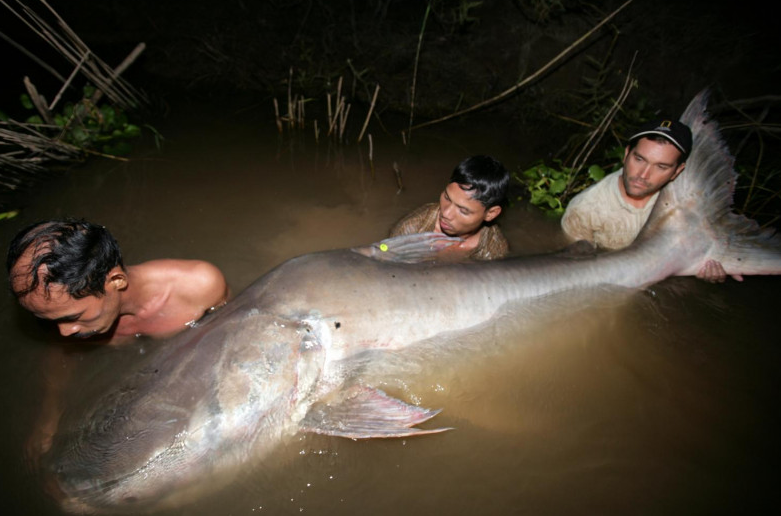
The Mekong River accounts for more than 15 percent of the world’s inland fish catch, with an economic value of more than US$11 billion annually. The depletion of fish stocks could impact the food security of 40 million people in the river’s lower basin and force millions dependent on the Mekong for their livelihoods to turn to agriculture, exacerbating deforestation and ecological destruction along the river.
The people who bear the brunt of the disaster, the study explains, are the fishers and families who live along the Mekong and rely on the river’s fish for food security and income. Their life and culture are closely related to the river and its fish. People in the lower Mekong region (Laos, Cambodia, Thailand and Vietnam) eat more fish than people in other parts of Asia.
Reuters reported in 2022 that China’s construction of an increasing number of hydroelectric dams on the upper Mekong River had blocked the flow of sediment into the Mekong Delta, an indispensable source of nutrients for tens of thousands of farms along the Mekong River, especially in the delta region.
Dams alter the flow and quality of the Mekong River hindering the migration of fish, so “the biggest and potentially growing threat right now is hydropower development,” said Hogan, addressing reporters.
Citing scientific research, the Mekong study attributes the lifeblood of the Mekong to the flow of water, sediment and nutrients. This flow is vital for all fish species in the Mekong, especially for the 321 species that are migratory.
But when hydroelectric dams were built along the Lancang-Mekong and its tributaries, Southeast Asia’s most important river was no longer free-flowing. Construction of dams on the Mekong began in 1965, but the vast majority were built after 2010. As of December 2023, there are 126 large operating dams in the Mekong basin, another 35 under construction, and 287 in the planning stage, according to the Mekong Infrastructure Tracker.
Scientists believe that the dramatic changes that impede the natural flow of the river are the main threat to fish in the Mekong. These changes not only negatively impact fish in a variety of ways but also exacerbate other threats. The most obvious consequence is the barriers created by dams preventing the free migration of fish upstream and downstream. This may limit access to the important spawning or feeding grounds that fish need to complete their life cycle.
Hogan said it was “not too late” for countries in the delta to coordinate efforts to reverse adverse impacts on fish stocks. “If we act now, collectively, to develop this river sustainably, we still have hope,” he said.
Read the original Chinese-language version of this summary at the publisher’s website here
The study “Mekong’s Forgotten Fishes” is available in full below.
 Patricia Adams
 Dai Qing
 Fan Xiao
 Lawrence Solomon
 Mu Lan
 Probe International
 Lisa Peryman
 Probe Media
 Other News Sources


 Probe International