
The Three Gorges Dam reservoir records its highest water level in July as torrential rains wreak havoc.
More than 100 Tibetans arrested over dam protest
In a rare act of defiance, residents push back against the construction of a massive dam that would destroy Buddhist monasteries and force the resettlement of two villages.
Why is the salty tide at the mouth of the Yangtze River related to the high dams and large reservoirs in the Upper Yangtze River?
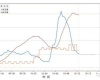
The Yangtze estuary’s saline tide has changed significantly since the impoundment of the Three Gorges Reservoir.
Where did the Yangtze go?
Expert highlights government actions as reason for dry-up, not just absence of rain.
China environmental groups slam plan to dam key lake on Yangtze river
Free Birds oppose the return of a project aimed at regulating the water flows of Poyang Lake, considered one of China’s vital “kidneys”.
Why is the flood control capacity of the Three Gorges Dam project being questioned again?
Because the project’s flood control capacity doesn’t work.
No more major developments on the Yangtze River?
President Xi Jinping’s pledge to prioritize environmental protection and halt new development projects on the Yangtze is a promising turnaround for China’s beleaguered river pulse but don’t hold your breath.
The world’s biggest hydropower project may be causing giant landslides in China
A massive landslide this week is only the latest natural disaster critics believe the Three Gorges Dam has caused—even officials admit there have been 70% more landslides and bank collapses in the dam’s reservoir area since it was built 12 years ago. Lily Kuo for Quartz reports.
Massive landslide capsizes boats on Yangtze tributary
Massive landslide in China caught on video along the northern bank of the Daning River, a Yangtze tributary. Details still forthcoming. Various reports say boats capsized, 4 people injured, 1 missing.
Half empty: China’s vanishing “kidneys”

CCTV, China’s state broadcaster, looks at the use of remote sensing to monitor the country’s vanishing “kidneys” — wetlands that provide a range of invaluable ecosystem services that have become seriously under threat from rapid urbanization and modernization.
Bo Xilai’s pet project blocked … for now
Construction of a controversial hydropower project that would flood one of the last remaining unaltered stretches along China’s famed Yangtze River has been blocked by the country’s environmental regulators — a surprise defeat in the face of an unrestrained dam-building boom that many opponents worry will cause an irreversible legacy of damage.
The heat is on for the ‘living fossil’

Despite its long lineage as one of the world’s oldest living species, the Chinese sturgeon — known as the “living fossil” because it dates back to the Cretaceous period — may not survive the surging dams and bridges built over the Yangtze River, reports China Daily.
Is the Three Gorges Dam to blame for extreme drought in the Lake Poyang area?

(May 16, 2014) Lake Poyang, the largest freshwater lake in China, has in the past decade suffered record low water levels and its worst drought in 60 years. Although uneven rainfall patterns and industry on the lake are partly behind the decline in volume, the Three Gorges Dam has emerged as a major cause of the lake’s shocking dry-up. On a recent trip to China, Mu Lan, the editor of Probe International’s Chinese Three Gorges Probe news service, explored the link between Poyang’s crisis and the country’s hydro colossus.
Extreme drought in the Lake Poyang area [photo gallery]
(May 16, 2014) Mu Lan, the editor of our Chinese Three Gorges Probe news service, documents in pictures the decline of China’s largest freshwater lake on the southern bank of the Yangtze River in east China’s Jiangxi Province for his report, “Is the Three Gorges Dam to blame for extreme drought in the Lake Poyang area?”
China’s South-to-North Water Diversion project threatens flood of problems
(October 28, 2013) This excellent report by Agence France-Presse looks at the growing number of drawbacks posed by China’s South-to-North Water Diversion project and asks whether the $80-billion geo-engineering giant is creating more problems than it is supposed to solve. For example, the strong risk of collecting and distributing tainted water from the supply waterways it draws from, which would render the water carried unusable; the energy required to move water uphill for long sections; the displacement of entire communities in large numbers for reservoir construction, as well as the construction feats required to pull off certain aspects of the project’s plans – such as blasting channels through mountains in earthquake zones on the Tibetan plateau. Not to mention the threat posed by construction of this scale in seismically active zones.
 Patricia Adams
 Dai Qing
 Fan Xiao
 Lawrence Solomon
 Mu Lan
 Probe International
 Lisa Peryman
 Probe Media
 Other News Sources


 Probe International