A blockbuster report by Chinese geologist Fan Xiao uncovers the deceit, censorship and raw force at play in the resurrection of a massive dam project in a geologically complex region.

A blockbuster report by Chinese geologist Fan Xiao uncovers the deceit, censorship and raw force at play in the resurrection of a massive dam project in a geologically complex region.
For the first time, a comprehensive list of cascade dams in Sichuan Province shows the jaw-dropping extent to which one of China’s most hydropowered regions is being developed, proving the Xi Jinping […]
A USD80-million research project at India’s Koyna dam site will study reservoir-triggered earthquakes (aka reservoir-induced seismicity) and the causes behind them. Dam activity at Koyna was blamed for a powerful earthquake in 1967 that destroyed the village of Koynanagar in western India’s Maharashtra state, left 180 people dead, 1,500 injured, thousands homeless and power cut off to Bombay.
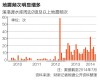
Beijing-based media group, Caixin, reports on Chinese geologist Fan Xiao’s research supporting a link between a 6.5-magnitude earthquake in China’s Yunnan Province in early August and the filling of dam reservoirs in the area. Several Probe International studies are cited.

Geologists express concerns that massive hydropower construction in the region may have contributed to seismic activity. Beijing-based media group, Caixin, interviews Chinese geologist Fan Xiao whose research supports a link between Yunnan’s 6.5-magnitude earthquake in early August and the filling of dam reservoirs in the area.
Analysis of rough data by Chinese geologist Fan Xiao, cited by the prominent scientific journal Nature, connects heightened seismic activity to August’s Ludian earthquake.

Seismic activity started to rise just as two giant reservoirs on the upper Yangtze were being filled with water. Nature magazine reports on the latest findings by Chinese geologist Fan Xiao, published by Probe International, on the link between mega-dams and seismic activity in China’s southwestern region.
In the wake of the 6.5-magnitude earthquake in China’s Yunnan Province on August 3 that claimed the lives of more than 600 people, Chinese geologist Fan Xiao has released new data that supports a link between that event and the region’s mega-dams.
If the findings of Chinese geologist and environmentalist Fan Xiao – and the author of several reports for Probe International – are accurate, they raise a serious question. This report by Quartz, a business news site from Atlantic Media, looks at some recent quakes in China linked to the filling of hydro-dam reservoirs.
The 6.5-magnitude earthquake that devastated southwestern China’s Yunnan Province on August 3 and killed nearly 600 is linked to the world’s largest and most intensive dam-building scheme on the Jinsha River, says renowned, independent geologist-explorer, Yang Yong.
“Why do earthquakes keep happening in that area?” In the wake of China’s 6.1 magnitude quake in Yunnan Province and a number of smaller quakes in the region, questions are once again being asked about the country’s rush to build big dams in its southwestern mountains, an area already vulnerable to seismic hazard.
(May 28, 2014) Another earthquake has struck the Three Gorges Dam reservoir region in central China’s Zigui County. No casualties have been reported so far and officials say the dam is operating normally. The 3.4 magnitude tremor which hit early Monday morning, some 23 km from the dam, follows two earthquakes of magnitude above 4.0 and hundreds of aftershocks which shook the same region in late March of this year. The events rank as significant according to Chinese geologist and environmentalist Fan Xiao, who says they are signals that the seismic threat posed by Three Gorges Dam is at its most critical stage now.
(April 7, 2014) Chinese geologist and environmentalist Fan Xiao says the recent quakes that struck central China’s Hubei Province in Zigui county — “the first county of the Three Gorges Dam” due to its proximity to the project site — signal that the seismic threat posed by Three Gorges Dam is at its most critical stage now. Reservoir-induced seismicity (RIS) is most likely to occur within a few years, even a decade after initial filling of a dam reservoir to its highest level, due to the time it takes for reservoir water to penetrate deep into seismic faults and fissures before it triggers seismic activity. A 2010 study revealed seismic monitors around the Three Gorges Dam reservoir and in Hubei Province registered 3,429 earthquakes between June of 2003 (when inundation of the reservoir began) and December 31, 2009: a 30-fold increase in seismic frequency over the pre-dam period.
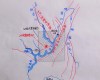
(February 3, 2014) Chinese geologist Fan Xiao investigates once again if the impoundment of a large dam reservoir triggered a series of earthquakes in the seismically active southwest region of China? Based on data collected by China Seismic Information (CSI), Mr. Fan says, ‘Yes’. Not only were the November 22, 2013, seismic events recorded in Sichuan, China not naturally occurring or isolated incidents, he says the region should prepare for stronger, “even destructive earthquakes” as a result of further impoundment.
(December 20, 2013) High-profile Chinese geologist Fan Xiao — and the author of several reports for Probe International — notes with interest the rush by China’s state media, and the country’s official seismological agency, to dismiss a link between the 5.1-magnitude Badong County earthquake on Monday and the Three Gorges Dam reservoir. A dismissal that runs contrary to common sense and the basic facts of seismic analysis, says Mr. Fan, who believes reservoir-induced-seismicity (RIS), triggered by impoundment of the massive dam, was likely behind the recent quake and could induce stronger earthquakes in the region.



 Patricia Adams
 Dai Qing
 Fan Xiao
 Lawrence Solomon
 Mu Lan
 Probe International
 Lisa Peryman
 Probe Media
 Other News Sources
 Probe International