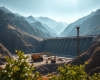
A blockbuster report by Chinese geologist Fan Xiao uncovers the deceit, censorship and raw force at play in the resurrection of a massive dam project in a geologically complex region.

A blockbuster report by Chinese geologist Fan Xiao uncovers the deceit, censorship and raw force at play in the resurrection of a massive dam project in a geologically complex region.
The earthquake has reignited concerns about the vulnerability of China’s extensive hydropower projects in Tibet.
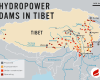
China’s plans for hydropower development in vulnerable regions has alarmed neighboring India and Bangladesh, who fear impacts on tens of millions of people downstream and water supplies.
A 6.2-magnitude earthquake that struck China’s northwestern Gansu province late Monday, killing more than 100 people and injuring hundreds, occurred in an area prone to earthquakes on the northeastern edge of the […]
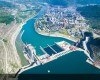
A 30 percent loss of output from two massive dams on the upper Yangtze, in combination with a 6.1M earthquake upstream and south-west of the two stricken hydro plants, heightens fears in […]
Two strong and separate earthquakes rattled northwest and southwest China this month – one of them the strongest since the devastating Wenchuan earthquake of 2008. The series of May quakes are part of […]
The 7.0-magnitude earthquake in southwest China’s Sichuan province earlier this month, and a devastating 2008 quake in the same province, are likely linked to the region’s dam-building program, says expert.

Another deadly landslide at a hydropower construction site in Fujian, south-east China, highlights the growing risks of dam building in mountainous regions of Asia. Chinadialogue.net reports.

Two of the most populous nations—China and India—are building hundreds of dams in a violently active geologic zone.
Projects are strong enough to withstand a rare “thousand year” earthquake, say China Three Gorges Corporation officials: “no need to worry”. Experts beg to differ.
This Huffington Post blog, by Peter Neill, founder and director of the World Ocean Observatory, looks at the global love affair with big dams and the perils of forcing water to acquiesce to political ambitions and national pride, and the sometimes dangerous results of doing so.

This spotlight on mega-dams of note, profiled by International Rivers’ Peter Bosshard for The Guardian, lists more banes than boons with a quest Jawaharlal Nehru, India’s first prime minister, famously described as the “disease of gigantism.”
Is China’s hydropower safe? Bloomberg’s Adam Minter cites Probe International’s investigations into the link between China’s dam-building and the surge in earthquakes.
(April 7, 2014) Chinese geologist and environmentalist Fan Xiao says the recent quakes that struck central China’s Hubei Province in Zigui county — “the first county of the Three Gorges Dam” due to its proximity to the project site — signal that the seismic threat posed by Three Gorges Dam is at its most critical stage now. Reservoir-induced seismicity (RIS) is most likely to occur within a few years, even a decade after initial filling of a dam reservoir to its highest level, due to the time it takes for reservoir water to penetrate deep into seismic faults and fissures before it triggers seismic activity. A 2010 study revealed seismic monitors around the Three Gorges Dam reservoir and in Hubei Province registered 3,429 earthquakes between June of 2003 (when inundation of the reservoir began) and December 31, 2009: a 30-fold increase in seismic frequency over the pre-dam period.
(April 1, 2014) A magnitude-4.7 earthquake hit Zigui county in central China’s Hubei Province last Sunday, around 23 kilometres from the Three Gorges Dam site location, several days after a magnitude-4.3 tremor was felt early Thursday morning about 30 kilometres from the dam. Authorities say the dam was not affected but they are monitoring the situation. There have been no reports of casualties or property damage, although news coverage has noted an increase in Chinese experts who support the speculation that the project itself is the cause of local seismic activity.



 Patricia Adams
 Dai Qing
 Fan Xiao
 Lawrence Solomon
 Mu Lan
 Probe International
 Lisa Peryman
 Probe Media
 Other News Sources
 Probe International