
(October 22, 2011) The recent suspension of the Myitsone dam in Myanmar shows just how unpopular China’s international dam-builders are becoming. In recent years, China has built a spate of new hydropower projects on rivers outside its borders, without much concern for their ecological and economic impacts downstream. Myitsone is a sign of growing resistance to these projects.
Environmental Hot Docs from China

(October 19, 2011) Independent documentary film plays a particularly critical role in a country lacking freedom of speech. Because the Chinese government is hiding the damage done to China’s environment by two decades of economic growth, citizens are taking up the job using film to expose the trade-offs between the environment and the economy, and the effect this is having on Chinese citizens and society at large.
Worries about water quality at source of diversion
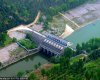
(October 18, 2011) From next year on, water quality will become a form of criteria used to evaluate the performance of local officials in Xichuan county of central China’s Henan province. The whole range of ecological indices to be adopted for official evaluation include the quality of water entering Xichuan, the establishment of tree plantations, the control of soil erosion and treatment of garbage and waste water, as well as the number of polluting enterprises that have been shut down.
China’s power growth slows
In China, hydroelectric output dropped by 20% from a year earlier. Authorities are now warning of winter power shortages in hydropower-rich southern and central regions due to low water storage, leading to questions about the reliability of China’s hydropower assets.
Dam postponement seen as rebuke to Beijing
Myanmar’s announced cancellation of the Myitsone dam on the Irrawaddy River has brought long-standing tensions with China into the open – including setting off conflicts with the Kachin Independence Organization in the north of the country. “It may be that the Myanmar government sees Chinese investment, in particular the Myitsone dam, as a destabilising force,” said Patricia Adams.
Joy amid caution as Burmese halt Chinese mega-dam
(October 8, 2011) The Burmese president announced that the controversial Chinese-financed Myitsone dam on the Irrawaddy River would be suspended. Now the Chinese government is threatening legal action if the rights and interests of its state enterprises aren’t protected.
In Wenchuan, geological risks continue
Three years after the devastating 2008 Sichuan earthquake, geologist Yang Yong investigates the proliferation of hastily approved mining and industry projects putting the area at risk of further geological disasters.
China’s air pollution problem
Patricia Adams of Probe International says worse things are happening to China’s air than increased CO2 emissions: “Nitrogen oxides and mercury are also emitted when hydrocarbons are burned and those emissions are truly troubling.”
Chinese activists protest secret arrest law
The wife of Chinese dissident artist Ai Weiwei, whose detention sparked an international outcry, has urged lawmakers to reject draft legislation that would cement in law police powers to hold dissidents in secret locations without telling their families. And Hu Jia, recently released from imprisonment on charges of subversion, has called for the “KGB secret police-style Red Terror methods” to be rejected.
Water shortage in Chinese cities – what the public thinks
(September 5, 2011) City-dwellers in China say they have an urban water crisis with shortages and pollution posing the gravest threats, a new survey reveals.
Ai Weiwei ‘speaks out’ – in writing
Even a gag order can’t silence dissident artist Ai Weiwei on the dark subject of human rights in China.
Dams gone wrong: Is danger lurking in China’s dams?
(August 24, 2011) One of China’s premier investigative news agencies reveals China’s dams “are like ticking time bombs:” beset by disaster, flaws, poor construction, neglect, and fraud.
Pro-democracy icon Aung San Suu Kyi urges Burma to save the Irrawaddy
(August 16, 2011) Burma’s pro-democracy leader and Nobel Peace laureate, Aung San Suu Kyi, has called for a reassessment of Burma’s massive 6,000 MW Irrawaddy Myitsone dam project.
China human rights and Canadian companies
(July 4, 2011) Probe International’s Patricia Adams joined a Business News Network (BNN) panel to discuss the dangers of corporations wishing to do business in China given its poor human rights record.
Face changing sea

(June 29, 2011) Rongcheng is one of China’s loveliest cities, surrounded by both the Yellow and Bhai seas. When writer Yang Furui pays a visit, he finds economic gains have taken a severe toll on not only Rongcheng’s seashore, but China’s southeastern shoreline in general.
 Patricia Adams
 Dai Qing
 Fan Xiao
 Lawrence Solomon
 Mu Lan
 Probe International
 Lisa Peryman
 Probe Media
 Other News Sources


 Probe International