
Is China’s hydropower safe? Bloomberg’s Adam Minter cites Probe International’s investigations into the link between China’s dam-building and the surge in earthquakes.
Yunnan earthquake raises fears on hydropower projects

Geologists express concerns that massive hydropower construction in the region may have contributed to seismic activity. Beijing-based media group, Caixin, interviews Chinese geologist Fan Xiao whose research supports a link between Yunnan’s 6.5-magnitude earthquake in early August and the filling of dam reservoirs in the area.
China Three Gorges subsidiary banned from World Bank projects
The World Bank bars China International Water and Electric Corporation (CWE), a wholly-owned subsidiary of China Three Gorges Corporation (CTG), from its projects for three years for misconduct in Africa and Southeast Asia. South China Morning Post reports.
Landslide destroys dam in Three Gorges region
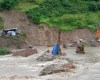
Geologists predict more frequent catastrophes in China’s Three Gorges Dam region, after landslides wipe out a hydropower plant. Fan Xiao and Yang Yong, the authors of several reports for Probe International, speak to thethirdpole.net about a disaster-prone region made more perilous by intensive hydropower development and call for new risk assessments to be carried out.
Saving China’s environment
Read in full Patricia Adams’ closing address to the International Symposium on China’s Environmental Crisis: Is There a Way Out? A resounding “Yes!” says Ms. Adams. “Give power to the people”.
“Daddy’s ‘friends’ are actually plainclothes cops”

Zeng Jinyan, the wife of Hu Jia, one of China’s best-known human rights activists, shares her personal experience of the high cost of political expression in China.
Chinese official disputes report linking fatal earthquake in Ludian and filling of reservoirs
Analysis of rough data by Chinese geologist Fan Xiao, cited by the prominent scientific journal Nature, connects heightened seismic activity to August’s Ludian earthquake.
Chinese data hint at trigger for fatal quake

Seismic activity started to rise just as two giant reservoirs on the upper Yangtze were being filled with water. Nature magazine reports on the latest findings by Chinese geologist Fan Xiao, published by Probe International, on the link between mega-dams and seismic activity in China’s southwestern region.
Impoundment of two mega-dams on China’s Jinsha River triggers earthquake in Ludian
In the wake of the 6.5-magnitude earthquake in China’s Yunnan Province on August 3 that claimed the lives of more than 600 people, Chinese geologist Fan Xiao has released new data that supports a link between that event and the region’s mega-dams.
China’s environmental crisis: Is there a way out?
China’s environmental crisis is the subject of an upcoming international symposium later this month, presented by the Riley Institute at Furman University and the Furman Department of Asian Studies. Probe International’s Patricia Adams will give the closing address on “Saving China’s Environment: Give Power to the People”.
China is being forced to choose between air pollution and deadly earthquakes
If the findings of Chinese geologist and environmentalist Fan Xiao – and the author of several reports for Probe International – are accurate, they raise a serious question. This report by Quartz, a business news site from Atlantic Media, looks at some recent quakes in China linked to the filling of hydro-dam reservoirs.
Africa in Fact: dirty dealing

The September 2014 issue of the monthly current affairs magazine, Africa in Fact, offers a dramatic snapshot of the all-embracing and, at times, astonishing ways in which the cancer of corruption impacts societies, diverting resources from much-needed public services, ranging from health care to national defence, into private pockets.
Why food aid fuels international conflict
A recent study by Harvard and Yale economists asks a question few in the aid community ask, after finding that food aid prolongs civil conflict and supports rebel groups by feeding them or providing them with goods that can be traded for arms or other services.
‘Don’t aim at fame; just be a good, compassionate person’
The environmental awareness of Chinese people has changed dramatically in the 25 years since her path-breaking book, Yangtze! Yangtze! on the environmental and social effects of China’s Three Gorges Dam, was published. Now, renowned journalist, author, activist and Probe International Fellow and correspondent, Dai Qing, sits down with the International Consortium of Investigative Journalists (ICIJ) for a look back on her experiences as a veteran reporter and the lessons of value she has learned along the way.
China’s Lacang River dams – impacts already ‘extensive’

Already, newly completed cascade dams along China’s Lancang River are altering the river’s hydrological regime and sediment flow, blocking fish migration and posing a risk to food security and livelihoods. As more cascade dams roll out along the Lancang, International Rivers offers a better understanding through their research of the environmental impacts of current development and what further impacts can be expected as more projects come online.
 Patricia Adams
 Dai Qing
 Fan Xiao
 Lawrence Solomon
 Mu Lan
 Probe International
 Lisa Peryman
 Patricia Adams and Lawrence Solomon
 Other News Sources


