
(May 16, 2014) Mu Lan, the editor of our Chinese Three Gorges Probe news service, documents in pictures the decline of China’s largest freshwater lake on the southern bank of the Yangtze River in east China’s Jiangxi Province for his report, “Is the Three Gorges Dam to blame for extreme drought in the Lake Poyang area?”
Did a dam cause a water surge ending in multiple deaths?
(May 7, 2014) Did a rise in Belize’s Macal River, due to the routine release of water from an upstream dam, as part of its daily operations, cause multiple deaths by drowning in recent weeks?
Fire on the water

(April 25, 2014) Lake Turkana, the world’s largest desert lake, has held water for at least five million years and is also known as the cradle of mankind for its abundance of hominid fossils, but may now suffer the same dry fate as the Aral Sea in central Asia thanks to hydro-electric development that ties neighbours Ethiopia and Kenya together. Writer Ben Rawlence looks here at how regional power plays can work against accountability and how the complexity of large projects and the many actors involved with them militates against holding anyone to account.
China’s new environmental law looks good … on paper
(April 24, 2014) Chinadialogue’s Beijing editor Liu Jianqiang reviews China’s newly revised environmental protection law which comes into effect in 2015 and represents the first time the law has been revised in 25 years. The new law provides authorities with the tools to dole out harsher punishments and sanctions to polluters, including more heat for officials found to be falsifying data and ducking environmental impact assessments. Under the new law, individual citizens still will not be able to initiate public interest lawsuits and although NGOs will be able to pursue litigation, the number permitted to do so has been capped, most likely in order to prevent a flood of environmental lawsuits in local courts and local authorities from being sued too frequently — which raises the question: what is the point of the law? In any case, says Mr. Liu, China’s environmental problems cannot be blamed solely on the lack of a powerful law but are more “the consequence of weak implementation and failure to hold officials accountable for rampant pollution and ecological destruction. … What good is perfect legislation if our authorities fail to implement it? China’s new law cannot answer this question.”
The UN is de facto dead
(April 24, 2014) The UN no longer counts in the world. Like the League of Nations, it will thankfully disappear, writes Lawrence Solomon for the Financial Post.
The probe of Three Gorges officials is getting too close for Communist Party leaders
(April 21, 2014) China’s roving corruption crackdown has uncovered nepotism, shady property deals and dodgy bidding procedures at the country’s state-owned Three Gorges Dam operator, Three Gorges Corporation. The news has reignited public anger over a project funded by a special levy paid for by Chinese citizens and has sparked speculation that President Xi Jinping is using Three Gorges as a way to target two of China’s biggest “tigers”.
Canadian pensioners wade into China’s housing market
(April 16, 2014) Working Canadians are placing a bet on the Chinese real estate market thanks to the Canada Pension Plan Investment Board that invests their obligatory pension contributions globally.
Will the World Bank’s latest mega expansion cause mega damage?
(April 14, 2014) A pledge by the World Bank’s new President Jim Yong Kim to increase spending will produce the same bad results that have plagued the Bank for decades.
Kariba Dam collapse fears and disaster preparedness in Zimbabwe

(April 11, 2014) Experts say an aging mega-dam on the Zambezi River between Zambia and Zimbabwe is in imminent danger of collapse and poses a threat to 3.5 million people. Zimbabwe’s disaster preparedness was revealed as “extremely weak” earlier this year after torrential rains caused the partial collapse of the country’s Tokwe-Mukosi dam, which displaced thousands and forced the government to declare it a national disaster.
Dam fools

(April 11, 2014) A report representing the most comprehensive economic analysis of large dams ever undertaken has dealt a stunning blow to the behemoths of hydropower. But will its findings be enough to curb a new wave in mega-dam construction? Unlikely, says Probe International.
Ukraine’s Odious Debts
(April 9, 2014) U.S. economist and columnist Irwin Stelzer draws on the doctrine of odious debts for his most recent opinion piece to suggest Ukrainian citizens repudiate public debt incurred by former regimes that instead of benefiting the people went to fund the “fancies” of the country’s “now-deposed gang of public- and private-sector cronies”.
More quakes linked to mega-dams
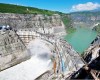
(April 9, 2014) Another earthquake has struck China’s seismically hazardous southwestern region in the same vicinity as one of the country’s mega-dams. Chinese geologist and environmentalist Fan Xiao says there is a “high probability” the Xiluodu dam, China’s second and the world’s third biggest hydropower power plant, triggered the quake.
Three Gorges Dam triggers frequent seismic activities
(April 7, 2014) Chinese geologist and environmentalist Fan Xiao says the recent quakes that struck central China’s Hubei Province in Zigui county — “the first county of the Three Gorges Dam” due to its proximity to the project site — signal that the seismic threat posed by Three Gorges Dam is at its most critical stage now. Reservoir-induced seismicity (RIS) is most likely to occur within a few years, even a decade after initial filling of a dam reservoir to its highest level, due to the time it takes for reservoir water to penetrate deep into seismic faults and fissures before it triggers seismic activity. A 2010 study revealed seismic monitors around the Three Gorges Dam reservoir and in Hubei Province registered 3,429 earthquakes between June of 2003 (when inundation of the reservoir began) and December 31, 2009: a 30-fold increase in seismic frequency over the pre-dam period.
Still fighting for compliance: Belize’s Macal River
(April 5, 2014) A letter to the editor expresses concern at the lack of response from Belize authorities to environmental lawyer Candy Gonzalez’ public campaign for government bodies to implement a risk management program for the controversial Canadian-owned Chalillo dam on Belize’s Macal River. In particular, the monitoring and testing of mercury levels in fish caught in the Macal and E. coli levels in the river’s water. Writes concerned villager, John Tut: “It seems that the Government of Belize has once again abandoned the well-being and livelihood of the Cayo people in favour of the monstrous multinational company – BECOL [the non-regulated hydroelectric generation business that operates the Chalillo dam, a subsidiary of dam owner, Canadian company, Fortis, Inc.].”
More earthquakes strike Three Gorges Dam region
(April 1, 2014) A magnitude-4.7 earthquake hit Zigui county in central China’s Hubei Province last Sunday, around 23 kilometres from the Three Gorges Dam site location, several days after a magnitude-4.3 tremor was felt early Thursday morning about 30 kilometres from the dam. Authorities say the dam was not affected but they are monitoring the situation. There have been no reports of casualties or property damage, although news coverage has noted an increase in Chinese experts who support the speculation that the project itself is the cause of local seismic activity.
 Patricia Adams
 Dai Qing
 Fan Xiao
 Lawrence Solomon
 Mu Lan
 Probe International
 Lisa Peryman
 Probe Media
 Other News Sources


 Probe International