
Sri Lanka’s new government is reviewing all investment projects signed by the previous administration. Chinese companies, awarded the majority of those deals, are at the center of the storm. Sri Lanka’s new finance minister, Ravi Karunanayake, says Chinese firms “used the opportunity of a corrupt regime to crowd out other companies”. CNNMoney and Business Insider report.
If you know where the missing $6 million is, please tell Sierra Leone
A third of the $18 million slated to combat Ebola in Sierra Leone may have gone to pay non-existent “ghost” workers, a government audit finds.
MDB “knowledge” banks
Former IMF chief economist Kenneth Rogoff says “far too little attention has been devoted to understanding why multilateral development lending has so often failed”. In his experience, MDBs are most valuable as “knowledge” banks — sharing soft development infrastructure such as experience and best practices rather than financial muscle. The latter, he says, has led to their “greatest failures”.
China’s blind “barefoot lawyer”

Blind human rights activist, and self-taught lawyer, Chen Guangcheng, gives an extraordinary interview here with the British broadcaster Matthew Bannister, detailing his very dramatic escape from China to the U.S., as well as his difficult childhood as part of a misunderstood and mistreated disabled community, where he first began speaking out to demand change.
China court to hear NGO lawsuit targeting polluter’s profits
A Chinese court has agreed to hear a lawsuit filed by an environmental NGO seeking $US4.8-million in damages from an industrial polluter in Shandong province — thought to be the first public interest litigation for air pollution under China’s new environmental law. ChinaFile reports.
Answerable to no one
Just as China took a moment to enjoy Washington and Tokyo’s discomfort over Europe’s biggest economies declaring in favour of a new Chinese-led Asian investment bank, Washington and Tokyo took a moment to caution joiners to beware of governance standards. We say: beware of multilateral development banks in general.
Lawyer Xi Xiangdong: Record of a meeting with He Zhengjun of the Transition Institute, detained on suspicion of “operating an illegal business”
This record of a meeting between He Zhengjun, a member of the Beijing-based independent think-tank Transition Institute, and his lawyer, Xi Xiangdong, earlier this year, details the roadblocks thrown up by prison authorities in disregard of the regulations that should permit a lawyer access to his client within a certain time frame.
A letter to my husband Guo Yushan: III

More than fifty days have passed since detained legal activist and scholar, Guo Yushan, was taken from his Beijing home. His wife, Pan Haixia, posts her third letter to him online in his absence.
“Under the Dome” and China’s “real blue sky”
Is the ultimate dome preventing China’s skies from clearing a political one?
China set to step up control over NGOs
This in-depth, must-read looks at a spike in intolerance for activism in China, which, under President Xi Jinping, has culminated in a massive setback for the country’s human rights activists, faced with the most severe crackdown since the Tiananmen massacre in 1989. China Digital Times explores what happened and why the government is so threatened by the emergence of independent civic groups and both domestic and foreign NGOs.
China makes no new promises in battle to clear the day as it fine-tunes pollution targets
One year after Premier Li Keqiang declared war on pollution, the central government seems to be refraining from making any new promises on the matter this year, focusing instead on following through on all its previously set targets. South China Morning Post reports.
“Under the Dome” finds its limits
A smog documentary that went viral in China over the weekend and riveted the nation with its TED Talks meets Al Gore blend of compelling data and engaging instruction, managed to both survive China’s censors and get “the chop”.
Canada may blacklist SNC Lavalin – The view from India
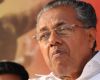
Media sources in India are following the Canadian government’s investigation of SNC-Lavalin with great interest.
Jewish (capital) flight from Europe
Over the centuries, Jews have periodically been sought — and shunned — as immigrants.
All-seeing, all-knowing
To some, the availability of big data in China signals a shift toward democracy. But technocrats within the government also see it as a way to create a more efficient form of authoritarianism. Aeon Magazine reports.
 Patricia Adams
 Dai Qing
 Fan Xiao
 Lawrence Solomon
 Mu Lan
 Probe International
 Lisa Peryman
 Probe Media
 Other News Sources


 Probe International