
Is there a coherent foreign policy strategy behind the huge sums of money the Trudeau administration has been quick to pledge in foreign aid spending since taking office or is the government’s foreign aid focus more a reactionary stance to what the Conservatives did or did not do?
Muskrat Falls becoming an over-budget burden on Newfoundland
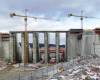
The Muskrat Falls hydroelectric project in Labrador needed a federal guarantee to get off the ground, which in itself testifies to its iffy economics, writes Konrad Yakabuski for the Globe and Mail. Now, he says, Newfoundland’s shrinking population faces paying for Muskrat Falls in more ways than one.
The negative effects on Haiti of too much foreign aid
Haitians know how to fish but they need access to a boat buoyed by property rights, rule of law and greater access to world markets. Nevertheless, some bright spots have emerged in a move away from the “over-aid” model: mangoes and the reopening of a wheat flour mill destroyed by the 2010 earthquake.
The Paris summit: A colossal waste of time
So far, all the pledges from all the countries put together would scarcely budge the needle on the great big global thermostat. This opinion piece for the Globe and Mail quotes Probe International’s new study on China’s climate policy and energy needs.
China puts rights lawyer Pu Zhiqiang on trial as police scuffle with diplomats and protesters
As President Xi’s crackdown on dissent continues, China’s most prominent human rights lawyer awaits sentencing on the “vague charges” leveled against him. Meanwhile, many of the 200 human rights lawyers authorities rounded up in July, in a major nationwide sweep, remain behind bars. The Los Angeles Times reports.
China’s ‘airpocalypse now’ moment highlights lethal deceit
Beijing’s first “red alert” raises an even more important question about the veracity of Chinese data on, not only the environment, but economic growth and other vital statistics. Minxin Pei reports for Nikkei Asian Review.
Deterrence lost in plea deals

Deferred prosecution agreements that let companies pay fines for wrongdoing could backfire by encouraging repeat criminality. Probe International’s Patricia Adams for the National Post.
No winners in corporate shakedown
DPAs were virtually unheard of in business settings prior to 2004, but their growing popularity in the U.S. is now being felt in Canada with SNC-Lavalin lobbying the Liberal government to have its fate determined by a DPA, rather than the criminal trial the Harper government pursued.
China: Novelists against the state
Writers can help the world adjust to impossible facts and injured societies to heal but, for Chinese writers, censorship makes exploring “the fate of humanistic values in post-Mao society” problematic. How can authors be candid and avoid punishment?
China’s wind waste

The biggest build-out of wind power “we’ll probably see anywhere” in the world, yet nearly one out of every five wind turbines in China isn’t spinning. Apart from wasting clean energy, this has meant China’s wind power industry has lost more than a billion dollars in the first half of this year alone. Rob Schmitz for Marketplace reports.
China’s pollution is not the same as cutting C02

Patricia Adams, an economist with Probe International, says China will not live up to global CO2 emission standards. Commodities host, Andrew Bell , for Business News Network (BNN), interviews Adams after the release of her new report, The Truth About China, today.
The truth about China
Why Beijing will resist demands for abatement. A new report by Patricia Adams.
China’s climate power game

China’s Communist party won’t curb the country’s CO2 emissions – doing so could lead to their overthrow.
China won’t cut back on its CO2 emissions
China won’t commit to curbing its fossil fuel use; instead, it will squeeze the West for billions in climate subsidies. That’s the conclusion of a study released today by economist Patricia Adams of Toronto-based Probe International for U.K.-based Global Warming Policy Foundation.
Sweden’s governments collapsing under weight of refugees
The crush of refugees, straining governments to the breaking point, now represent 4 per cent of Sweden’s 2016 budget.



 Probe International