
In truth, all that is keeping Meng Wanzhou from returning to China is rule by the Chinese Communist Party. Meng is a de facto captive of her own country more than of […]

In truth, all that is keeping Meng Wanzhou from returning to China is rule by the Chinese Communist Party. Meng is a de facto captive of her own country more than of […]
Legendary Chinese journalist-turned-environmental activist, Dai Qing, becomes a pocket warrior in the new Penguin Classics series, Green Ideas.
Because Prime Minister Justin Trudeau called an election, we may never know. The Canadian government says there is no cause for alarm. An investigation by Probe International’s Patricia Adams and Lawrence Solomon […]
Self-responsibility and the achievement of freedom.
Why when faced with societal problems, does the State respond with zero-sum solutions? That is, in an attempt to remedy the problem, it is always at the expense of our privacy and […]
Some say the area’s aging dams are a threat to the region, compounded by the Chinese Communist Party’s centralized response system. Probe International looks at why.
The retaliation over Meng’s arrest and the jailing of the two Michaels should wake up anyone still holding notions of a peaceful China.
The CCP has been this brazen for years, but there’s a tendency among Westerners to negate the ideology that’s at the heart of the regime.

A centralized system that prevents local governments from responding fast during emergencies, and rewards them for relief efforts over efforts to prevent calamity, is a recipe for disaster. Analysts weigh in on […]
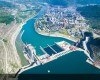
A 30 percent loss of output from two massive dams on the upper Yangtze, in combination with a 6.1M earthquake upstream and south-west of the two stricken hydro plants, heightens fears in […]
The Chinese Communist Party is hoping to enlist the efforts of a new-era Edgar Snow – amenable foreign journalists deployed as “useful idiots” to improve the regime’s image abroad.
The Chinese Communist Party has gained a foothold in Canada. The ever-deepening institutional co-operation and connection with the Beijing regime should prompt alarm, or at least serious discussion, but woe to those […]
When it comes to the repair, upkeep and/or closure of dams across dam-packed China, the buck keeps shifting. But should one of these 80,000-plus time bombs explode? Renowned hydrology expert Wang Weiluo […]
Two strong and separate earthquakes rattled northwest and southwest China this month – one of them the strongest since the devastating Wenchuan earthquake of 2008. The series of May quakes are part of […]
The bulk of the pro-Israel lobby is not dominated by Jewish Americans, but the anti-Israel lobby is another story.



 Probe International