
Bombed, breached, hacked … dams have a long history as weapons of war, seized on or attacked for their capacity to wreak massive havoc and suffering.

Bombed, breached, hacked … dams have a long history as weapons of war, seized on or attacked for their capacity to wreak massive havoc and suffering.
Talk of a new Cold War is not only overblown but counterproductive to the West’s security interests.
The EU and especially the U.S. gave Putin fertile ground with which to exploit the ensuing mayhem of months of orchestrated anarchy.
How to make sense of the different factions and forces now fighting in Syria and Iraq?

(June 4, 2014) On the 25th anniversary of the Tiananmen Square crackdown today, we recommend a visit to the Twitter page of Patrick Chovanec and the tremendous photographs he has posted commemorating the events of June 4, 1989. Patrick is an adjunct professor at Columbia’s School of International and Public Affairs, and a former business professor at Tsinghua
(April 24, 2014) The UN no longer counts in the world. Like the League of Nations, it will thankfully disappear, writes Lawrence Solomon for the Financial Post.

(April 11, 2014) Experts say an aging mega-dam on the Zambezi River between Zambia and Zimbabwe is in imminent danger of collapse and poses a threat to 3.5 million people. Zimbabwe’s disaster preparedness was revealed as “extremely weak” earlier this year after torrential rains caused the partial collapse of the country’s Tokwe-Mukosi dam, which displaced thousands and forced the government to declare it a national disaster.
(January 7, 2014) To help its most vulnerable customers cope, one UK power company provided them with Christmas dinners as well as hotel accommodation, all at shareholder expense.

(September 18, 2013) Guo Yushan, a longtime friend and colleague of high-profile Chinese human rights activist Xu Zhiyong, penned a grand and robust entreaty to Xu in late July (translated here into English), urging Xu to stand his ground as he awaits trial for “assembling a crowd to disrupt order in a public place.” In reality, Xu, a well-known lawyer and founder of China’s fledgling “New Citizens’ Movement”, had called on officials to disclose their financial assets as it is thought assets disclosure will reveal the true level of corruption among government officials who exploit their political power for personal gain. In his letter, Guo likens Xu to Socrates facing the wrath of Athens and China to the disgraced biblical city of Sodom, and exhorts Xu to rise to his fate as an idealist, unrepentant — “let them charge you, let them torture you”.
(September 12, 2013) The U.N., in addition to not issuing an apology, has never accepted responsibility for the deadly epidemic that has killed more than 8,260 and sickened over 675,000 in the last three years writes Washington-based think tank, The Center for Economic and Policy Research (CEPR).
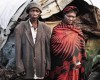
(October 1, 2012) This article on the crisis facing Pygmy tribes in the Congolese rainforest by anthropologist Geoffrey Clarfield underscores the crucial relationship between property rights and human rights. For the last decade, competing militias have terrorized the Pygmies of the Democratic Republic of the Congo, while in the Central African Republic (CAR) they face losing much of their traditional hunting areas to logging. The government, the World Bank, the EU, the Chinese and most of the large development organizations believe that the CAR can only “develop” its economy by cutting down its rainforest and selling the timber. Without recognized property rights, Pygmies are being forced from their forest homes, dispossessed of the lands they have stewarded and lived in for 40,000 years.
(July 19, 2012) From falling bridges to construction site mudslides, the collateral damage from China’s building spree mounts up.
(April 10, 2012) Three international environmentalist activists, each an outspoken pioneer in challenging conventional assumptions about water use, share their insights and experience. Featuring Probe International’s Patricia Adams and Dai Qing.

(March 19, 2012) Listen to Probe International’s Patricia Adams on “Demon Coal” – an in-depth look at the fossil fuel that made the industrial revolution happen, it’s demonization in the 21st century, and why coal is still a fuel of the future.

(June 15, 2011) How microblogs are becoming a platform for independent election campagins.



 Patricia Adams
 Dai Qing
 Fan Xiao
 Lawrence Solomon
 Mu Lan
 Probe International
 Lisa Peryman
 Probe Media
 Other News Sources
 Probe International