
To most observers, Chinese officialdom has supported the Three Gorges Dam without fail. But a closer look reveals growing worries about the dam which has become a symbol of all that is wrong with China’s rise. Here we present Chinese officials’ admissions of problems at Three Gorges, from the sensational mea culpas of senior officials to the subtly expressed worries of eminent scientists.
Dam postponement seen as rebuke to Beijing
Myanmar’s announced cancellation of the Myitsone dam on the Irrawaddy River has brought long-standing tensions with China into the open – including setting off conflicts with the Kachin Independence Organization in the north of the country. “It may be that the Myanmar government sees Chinese investment, in particular the Myitsone dam, as a destabilising force,” said Patricia Adams.
Joy amid caution as Burmese halt Chinese mega-dam
(October 8, 2011) The Burmese president announced that the controversial Chinese-financed Myitsone dam on the Irrawaddy River would be suspended. Now the Chinese government is threatening legal action if the rights and interests of its state enterprises aren’t protected.
In Wenchuan, geological risks continue
Three years after the devastating 2008 Sichuan earthquake, geologist Yang Yong investigates the proliferation of hastily approved mining and industry projects putting the area at risk of further geological disasters.
China’s air pollution problem
Patricia Adams of Probe International says worse things are happening to China’s air than increased CO2 emissions: “Nitrogen oxides and mercury are also emitted when hydrocarbons are burned and those emissions are truly troubling.”
China’s biggest relocation project yet: GlobalPost
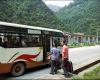
A massive forced relocation is underway in Shaanxi: 3 million residents – double the number displaced by the Three Gorges Dam – will be moved from mountains and farming villages, in part, to make way for China’s South-North Water Diversion Project, reports Kathleen E. McLaughlin at GlobalPost. Migrants don’t even get full compensation for their lost homes. Instead, they’re only given about 10% of the cost – and forced to make up the rest by taking out government loans.
Liu Zhi: “Chaos reigns in China’s river valleys”
(September 29, 2011) Liu Zhi from the Beijing-based Transition Institute looks at China’s costly and chaotic dam-building spree, and the legal and economic reasons behind the bad investments.
Shale gas in China
(September 28, 2011) Shale gas is a burgeoning (if controversial) industry in the United States, but in China, which may have reserves to rival the U.S., development is only beginning. Liu Zhi, of Beijing’s Transition Institute, discusses the potential and the problems of China’s shale gas industry.
China to build sixty new hydro projects in five years
An article by China Energy News Net reveals that China’s next Five-Year Plan will put huge emphasis on hydropower, with plans to build major projects on most of the large rivers originating in the Tibetan plateau and to use 100% of eastern/central China’s hydropower potential.
Weibo Watch: Issue 7
This week on Weibo Watch: rock desertification is turning a huge swath of southwest China barren; villagers in Guangdong fight illegal, environmentally damaging mining; citizens in Zhejiang, protesting an energy company’s carcinogenic pollution, face official denial and police detention; restaurants stop selling shark fin; and an NGO walks along the highly polluted Xiang River.
Weibo Watch: Issue 6

This week, netizens take on polluting phone manufacturers, document Beijing’s traffic troubles, successfully shut down a hunting festival and investigate sales of mysterious “grey swan” meat for the Mid-Autumn Day Festival.
Three Gorges Dam faces Yangtze flood crest
(September 21, 2011) The Three Gorges Dam faced a test as torrential rain upstream caused the year’s largest flood crest.
For development, China moves millions: GlobalPost

Around 1.5 million people were moved to make way for the Three Gorges Dam: some were wooed by promises of new homes, land, and better lives, and others were forced. Ten years on, Kathleen E. McLaughlin of GlobalPost investigates the results of the relocation. Many migrants languish hundreds of miles from their hometowns, without farmland or new jobs, facing mounting debt and with little chance of legal redress.
Zeng Jinyan: Middle class parents in China looking for a better education for their kids

(September 16, 2011) On the western outskirts of Beijing, middle class Chinese parents and teachers have chosen a site to construct and decorate a school, called Spring Valley. They do most of the work themselves maintaining traditional Chinese culture and practices, but applying a local version of the famous Waldorf education model.
Shennongjia exposes reckless development of China’s water resources
This Guardian article describes the case of Shennongjia, a region choked with dams, which caused a scandal in the Chinese media when the extent of official corruption and mismangement became clear.
 Patricia Adams
 Dai Qing
 Fan Xiao
 Lawrence Solomon
 Mu Lan
 Probe International
 Lisa Peryman
 Probe Media
 Other News Sources


 Probe International