
More on the Three Gorges Dam’s flood control capabilities and its performance in one of the wettest seasons for China since the record-breaking El Niño event of 1997-98. In this report, The Economist concludes the country’s weakened river pulse is “in danger not only from floods but from its flood controls.”
Why is the flood control capacity of the Three Gorges Dam project being questioned again?
Because the project’s flood control capacity doesn’t work.
Dispute between CNOOC and Toronto-listed Husky and Primeline could impact China-Canada trade
This terrific article by the Financial Post echoes the warning signs of an earlier Post piece by Probe International’s Patricia Adams on trade with China and, in particular, China’s state-owned enterprises.
World Bank caution to Tanzania criticised
These comments by Tanzanian economics professor Humphrey Moshi serve as quite an indictment of the wayward World Bank. When China — no stranger to poor practices itself — is your “saviour” from bad World Bank policies … The Daily News reports.
Aid is best spent in poor, well-governed countries. That isn’t where it goes.
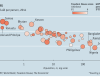
This Economist piece doesn’t mince words: foreign aid, it says, “is a mess in almost every way”. Hard-won transparency in aid over the past decade has actually revealed “just how badly things are going”.
Keep an eye on this
A USD80-million research project at India’s Koyna dam site will study reservoir-triggered earthquakes (aka reservoir-induced seismicity) and the causes behind them. Dam activity at Koyna was blamed for a powerful earthquake in 1967 that destroyed the village of Koynanagar in western India’s Maharashtra state, left 180 people dead, 1,500 injured, thousands homeless and power cut off to Bombay.
China builds new framework governing civil society organizations
The National Law Review breaks down highlights from China’s controversial new Law on the Management of the Activities of Foreign Non-Governmental Organizations Within China into two parts: the first looks at Charity Law, the second, Foreign NGO Law.
Why China’s nuclear exports may struggle to find a market

China seems well placed to trump its competitors in the nuclear export business but buyer concerns about the quality of components, the rigor of the Chinese regulatory system, the risk of dependence on China and the potential leakage of technologies with strategic geopolitical use, may prove a tough sell. China Dialogue reports.
Landslide at Chinese dam site signals looming risks

Another deadly landslide at a hydropower construction site in Fujian, south-east China, highlights the growing risks of dam building in mountainous regions of Asia. Chinadialogue.net reports.
Too many dams to look after
As China continues to embrace a new era of hydropower expansion, demand for dam inspection has outpaced the country’s supply of inspectors, ramping up safety fears for thousands of small- and medium-sized dams in China’s rural areas that have been “ignored”, reports Ecns.cn.
People power for China’s rivers
China’s environment minister enlists people power to help clean up the country’s “black and stinky” waterways.
Mekong Delta loses half of silt to upstream dams: scientists

A soft shield of silt that took over 6,000 years to form and which protects the ‘rice bowl’ of Vietnam against intrusion from seawater, erosion and declining groundwater levels has been seriously stripped by Chinese dams on the Mekong River, say experts. Half of the river’s essential sediment is now trapped upstream and the delta may be in jeopardy of disappearing altogether. Thanh Nien News reports.
A warning for parched China: a city runs out of water
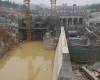
Experts fear Lintao’s dry-up is a sign of things to come. Probe International fellow and noted Chinese environmental journalist, Dai Qing, says China’s water scarcity and toxicity is the greatest danger facing her country today.
The myth of sustainable hydropower

2016 will be a decisive year for hydropower projects on the mainstream Mekong. Southeast-Asia based journalist, Tom Fawthrop, looks at the notion of ‘nice dams’ that supposedly don’t inflict too much damage on their surrounding environments and their opposite reality: the hidden costs of hydropower and the irreversible destruction of unique ecosystems.
St. Lawrence River is ‘slowly dying,’ U.S. environmental group warns

American Rivers says “harmful” dam operations, not pollution, are threatening fish, wildlife and local communities.
 Patricia Adams
 Dai Qing
 Fan Xiao
 Lawrence Solomon
 Mu Lan
 Probe International
 Lisa Peryman
 Probe Media
 Other News Sources


 Probe International