
Despite the success of Beijing’s “blue sky” energy policy, the forced coal-to-gas/electric program has created a significant humanitarian and economic crisis in the rural areas surrounding the capital.

Despite the success of Beijing’s “blue sky” energy policy, the forced coal-to-gas/electric program has created a significant humanitarian and economic crisis in the rural areas surrounding the capital.
A new report reveals that nearly half of all solar inverters and battery energy storage systems imported into the U.S. from 2015–2024 came from high-risk Chinese manufacturers.
Maduro’s capture triggers heavy sour crude squeeze as Caribbean tanker routes shift and China’s $17-19B oil-backed loans hang in balance.
Activist-driven litigation threatens to undermine American energy independence while bolstering China’s dominance in green technologies.
Lessons of the past: principles must be “accompanied by steel along with good intentions,” or liberty itself will wither.
China’s AI-driven data center boom, powered by coal and prioritized over climate goals, epitomizes the energy paradox of generative AI.

Politically driven overfilling, structural flaws, and emergency discharges at several of the city’s reservoirs point to systemic failures in prioritizing water storage capacity over flood safety, says expert.
Beijing’s July floods expose systemic failures in flood management and infrastructure prioritization.

Decades-old infrastructure strains under demand. Experts warn new fixes won’t address systemic flaws.
China is leveraging its influence to cow criticism of its avaricious projects in one of the world’s most fragile regions.

A CCP-affiliated study touts China’s proposed transboundary Yarlung Tsangpo hydropower project as climate-resilient, but critics decry claims as biased propaganda that ignores grave issues and violations.

Sovereignty over Canada’s Arctic is now up for grabs, with China among the contenders.
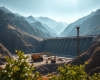
China’s planned transboundary Yarlung Tsangpo hydropower project in occupied Tibet is less about energy demand and conservation and more a case of “extreme nationalism,” a new report argues.
Why would Chinese authorities remove four articles on hydropower dams by high-profile geologist Fan Xiao from WeChat after tolerating them for years?
The earthquake has reignited concerns about the vulnerability of China’s extensive hydropower projects in Tibet.



 Patricia Adams
 Dai Qing
 Fan Xiao
 Lawrence Solomon
 Mu Lan
 Probe International
 Lisa Peryman
 Probe Media
 Other News Sources
 Probe International