
China’s massive South-to-North Water Diversion project, created to relieve a water crisis in the country’s parched north by tapping its more water-rich south, has produced an unexpected outcome: many cities in north China aren’t using the water. The Wall Street Journal looks at why.
China targets dirty businesses in water pollution action plan
China orders the closure of small plants in 10 polluting industries and a curb on the tapping of aquifers in an effort to reign in contamination of its water supply. Probe International Fellow, activist and journalist Dai Qing is quoted for this article by the Financial Times.
Ten years later: China’s golf course crackdown gets serious
On March 30, China’s National Development and Reform Commission ordered the immediate closure of 66 golf courses across the country — the first sign of follow-up on a 10-year moratorium on new courses that a report by Beijing Today describes as “an admission of the failure” of that ban. During the past decade, instead of declining, the number of golf courses on the Chinese mainland exploded from 178 in 2004 to 528 in 2013. How did that happen in the face of a government crackdown?
Scientists question environmental impact of China’s Winter Olympics bid
According to Beijing’s bid to hold the 2022 Winter Olympic Games, the environmental impact of the Games will be “ecofriendly” and “sustainable”. Experts say otherwise: providing snow for events will be tough in a city where “it just doesn’t snow” and “a Martian-like plan” will be needed to create artificial cover. Conservationists worry about moves to build Olympic ski resorts in national parks and protected nature reserves. Ski resorts, meanwhile, require water and lots of it but Beijing doesn’t have water.
Will China’s dams control the Mekong’s flow?
Low water levels and stranded boats on the upper Mekong River — although, nothing new for a February in recent years — are once again stirring concerns over China’s dam-building program to the north. What is new is the apparent readiness of Chinese authorities to give an account of their actions to rectify the situation. The Lowy Interpreter reports.
Taking the long view
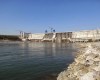
Late last year, Mu Lan, the editor of Probe International’s Three Gorges Probe news service in Chinese, followed the central leg of China’s massive South-to-North Water Diversion Project with his camera as it made its way from Hubei Province to Beijing, the project’s ultimate destination.
The EU promoted reckless borrowing and spending. Now German taxpayers will suffer
It will now be the turn of Germany — more likely, individual German taxpayers — to take on the role of suckers.
To the piste!
The constant stream of news coverage on China’s water crisis hasn’t dampened Beijing’s bid to host the 2022 winter Olympics and the production of a key, water-guzzling component of that bid: snow. The Economist reports.
China’s water policies are exacerbating water stress, says new study
A new study of China’s approach to water scarcity, co-authored by a consortium of British, Chinese, and American universities, has deemed the country’s massive South-to-North Water Transfer project an example of “pouring good water after bad”.
China’s water crisis gives foreign firms an ‘in’
The Chinese government’s $97-billion pledge to clean up the country’s dire water situation has afforded foreign water firms market opportunities typically denied them in the past. Even so, roadblocks still prevail as China continues to put the breaks on importing the international expertise it needs to help with its water recovery.
China’s water revival
Chinese citizens and industry are both willing to do their part to help turnaround the country’s water crisis, according to a new survey, but they don’t see how without a mechanism that allows the government, industry and end users to work together. Could that missing mechanism be market discipline, rule of law and citizen empowerment?
China farmers washed away as Beijing taps water from south

Many of the more than 300,000 Chinese moved to make way for the country’s monumental South-North Water Diversion project have been left unemployed in leaking, shoddy houses, while few say they have […]
China turns to drastic measures to avoid water crisis
China will soon turn on the taps of the world’s biggest water-diversion project.
Concern mounts in China over Yangtze diversion project
China’s ambitious South-to-North Water Diversion project officially begins flowing next month and the impacts of the costly geo-engineering giant are starting to be felt in the regions tapped to redistribute water to the country’s parched north. “This project from the beginning has been as controversial as the Three Gorges,” says Probe International fellow and leading Chinese environmental journalist, Dai Qing.
Beijing to tap water from thousands of kilometers away
While there is no doubt China’s industry-heavy northeast is parched, some critics say China’s geo-engineering South-North Water Diversion project is yet another example of China trying to engineer its way out of a problem that could be largely solved through better policies, such as a tiered pricing system for water and better monitoring. Stian Reklev for Reuters reports.
 Patricia Adams
 Dai Qing
 Fan Xiao
 Lawrence Solomon
 Mu Lan
 Probe International
 Lisa Peryman
 Probe Media
 Other News Sources


 Probe International