
(June 27, 2013) The Kerala High Court has directed India’s Central Bureau of Investigation (CBI) to divide the SNC-Lavalin trial charge sheet so the trial can begin. Two of the nine accused, SNC-Lavalin VP Klaus Triendl and SNC-Lavalin itself, have failed to appear in court despite several summons. According to press reports, Indian authorities are now seeking the extradition of Mr. Triendl, but Canada’s Department of Justice won’t confirm or deny the existence of the extradition request “due to the confidential nature of state-to-state communications.”

Other News Sources
Chile’s Bachelet says Patagonia dams not viable

(June 26, 2013) Former Chilean president Michelle Bachelet, who hopes to regain power at election time later this year, has come out against Chile’s HidroAysén mega-dam scheme. Most Chileans also oppose the controversial plan that would flood globally rare forest ecosystems, river valleys and farmlands in the country’s southern Aysén region and tame two of the world’s wildest rivers. In a complete about-face from her stance as President, Bachelet openly declared her opposition to the five planned dams in Patagonia in a televised debate.
Key source in giant Chinese water scheme polluted
(June 25, 2013) The Danjiangkou Reservoir, a major supply source for China’s high-cost South-North Water Diversion project — slated to provide Beijing with water by 2014 — is heavily polluted with untreated sewage. Lax enforcement of environmental laws and a shortage of funds are making the situation worse, says the National Committee of the Chinese People’s Political Consultative Conference. A deeper problem is the absence of legislation governing water sources, China Daily reports.
Small dam construction to reduce greenhouse emissions is causing ecosystem disruption
(June 20, 2013) A new report says the global push to reduce greenhouse gases by building small dams, with the help of the Kyoto Protocol, is causing unanticipated and potentially significant losses to habitat and biodiversity.
Officials from China’s Three Gorges Corporation visit troubled U.S. lock

(June 19, 2013) Officials from China’s Three Gorges Corporation and Project Construction Committee (TGPCC) paid a visit earlier this month to the troubled U.S. Chickamauga Lock in Tennessee as part of an information sharing exchange organized by the U.S. Army Corps of Engineers (USACE) — responsible for the operation and maintenance of navigation locks on the Tennessee River. TGPCC, established by China’s State Council to oversee construction of the massive Three Gorges Dam project, has concerns regarding its own ship locks: some 733 cracks were reported to have appeared in the east and westbound channels of the Three Gorges dam’s five-step shiplock, along with a worrisome distortion that may have been caused by crustal plate movement, among other issues. The dam’s ambitious and intensely complex ship lift, slated for completion in 2015, has yet to be tested.
BECOL warning system failed
(June 16, 2013) Belize: Various reports indicate a planned test of an early warning system in the event of a break at the Chalillo dam has failed.
China detains journalist who documented labour camp abuses, Tiananmen crackdown accounts

(June 12, 2013) Beijing-based photojournalist Du Bin has been detained by Chinese state security officials after he disappeared following the release of his documentary on Chinese labour camp abuses — profiled here by Probe International last month. His sister, high-profile human rights activist Hu Jia, says Du is being held because his work directly challenges the authorities: “They are suppressing him to send a message to others,” she says. Gillian Wong reports for the Associated Press.
Uprooted

(June 14, 2013) Yang Yi’s surreal photo memoir of his childhood home, flooded for the construction of China’s Three Gorges Dam project, received special mention as one of New York’s Best Weekend Art Events in May when it debuted at Galerie Richard. Its run ends tomorrow, June 15.
NY regulators approve Fortis takeover of CH Energy, with advice to “understand our rules and regulations”
(June 13, 2013) The New York state Public Service Commission unanimously approved the $1.5 billion bid by Canadian-based Fortis Inc. to take over Central Hudson Gas & Electric Corp.’s parent company, CH Energy Group despite “fierce public hostility.” Commission Chairman Garry Brown warned Fortis to avoid looking at the local utility as a profit-generating holding. “Get to know New York,” he advised Fortis. “The way you may do things, business, elsewhere is not New York,” in a probable reference to Fortis’s controversial record of dam-building in Belize.
Fortis proposed buyout of NY utility jeopardized by corporate reputation
(June 12, 2013) As Canadian electric utility holding company Fortis Inc. awaits a decision on its proposed $1.5-billion buyout of New York’s CH Energy Group, a coalition of groups opposed to the takeover see Fortis’ past performance in Belize and British Columbia as a warning of what may lie in store for them. Probe International provides a round-up of reports on the controversy.
$45.5 million of Three Gorges relocation fund misused: audit
(June 8, 2013) China’s national auditing watchdog says millions of yuan intended for Three Gorges Dam migrants were misappropriated and used for projects that had nothing to do with relocation.
Funds misused in Three Gorges Project
(June 8, 2013) Funds intended for Three Gorges migrants were misappropriated while funds for geological disaster prevention and ecological protection were mismanaged, says China’s National Audit Office.
The problem with environmental impact assessments – continued
(June 3, 2013) News that an environmental impact assessment (EIA) for China’s tallest dam was approved last month by the Ministry of Environmental Protection is a signal that developers and politicians in China understand well the green-washing power of EIAs to move forward destructive projects.
Small dams an even bigger dam problem, say researchers

(June 1, 2013) New research from Oregon State University reveals small dams are no easier on the environment than their larger counterparts and often present more of a threat to their surroundings. The comparison between 31 small dams built on tributaries to China’s Nu River and four large dams proposed for the main stem of the same river, found the effects of the smaller dams were worse for nine out of the 14 characteristics studied. Habitat loss and damage at several dam sites show that the environmental effects of small dams are often greater, sometimes by several orders of magnitude. “A lack of regulation paired with a dearth of communication between small dam projects in China allows for the effects to multiply and accumulate through several dam sites,” say researchers.
Flow test for water project gets underway
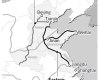
(May 31, 2013) The process of diverting water from the Yangtze River through the eastern route of China’s massive South-to-North Water Diversion Project began this week after 11 years since construction began. Although the water diversion intended for drought-prone cities in China’s arid northern regions “will enrich the water supply in the north, its impact on the ecosystem is irreversible,” said Ma Jun, an environmentalist.
 Patricia Adams
 Dai Qing
 Fan Xiao
 Lawrence Solomon
 Mu Lan
 Probe International
 Lisa Peryman
 Probe Media
 Other News Sources


 Probe International