What started as “security” measures prompted by the Ukraine war, appears to be moving to a blueprint for a fragmented, controlled Runet (Russia’s internet).

What started as “security” measures prompted by the Ukraine war, appears to be moving to a blueprint for a fragmented, controlled Runet (Russia’s internet).
A seismic data leak has identified Geedge Networks—founded by China’s “Great Firewall architect” Fang Binxing—and its role in exporting China’s authoritarian controls via ISP partnerships.
A former Hong Kong district councilor arrested under Article 23 (but not charged), claims systemic repression after losing an acting role and teaching job within 24 hours.
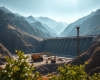
A blockbuster report by Chinese geologist Fan Xiao uncovers the deceit, censorship and raw force at play in the resurrection of a massive dam project in a geologically complex region.
Candid assessments about the state of China’s economy were circulated by netizens almost as fast as they were censored.
Happy-hour huddles give Chinese students “a place without authority…to speak their mind.”
The CCP has turned the internet, designed as a tool of freedom, into the ultimate tool of control.
The recent accidental launch of a space rocket in China’s Henan province highlights the challenges faced by journalists in a reporting environment controlled by the state.
The number of Chinese websites is shrinking and posts are being removed and censored, stoking fears about what happens when history is erased.

China’s acclaimed master of independent cinema risks punishment to screen his latest release at Germany’s Berlinale without approval from Chinese authorities.
An interview with Jiang Xue, a leading voice among China’s early-2000s investigative journalists leveraging emerging (though short-lived) digital freedoms to expose systemic social injustices.
Will the death of China’s best-known pro-democracy activist in state custody embolden the country’s dissident movement despite efforts to erase his memory?
China’s expanding surveillance, censorship, and suppression of dissent have forged an invisible prison of enforced silence, eroding freedoms under the pretext of socialist stability.
Writers can help the world adjust to impossible facts and injured societies to heal but, for Chinese writers, censorship makes exploring “the fate of humanistic values in post-Mao society” problematic. How can authors be candid and avoid punishment?
A lawsuit filed by the daughter of retired Communist Party official, Li Rui, challenges the legality of airport seizures in China after a book by her father — an unvarnished account of his experiences in the leadership — was confiscated by customs officials. The country’s border controls have sharpened dramatically in recent years, making it much riskier to bring banned books to mainland China, say publishers and authors. The New York Times reports.



 Patricia Adams
 Dai Qing
 Fan Xiao
 Lawrence Solomon
 Mu Lan
 Probe International
 Lisa Peryman
 Probe Media
 Other News Sources
 Probe International