
(July 12, 2012) Almost 20 years in the making, China’s Three Gorges mega-dam was declared complete on July 4 when the last of its 32 generators went online, 10 years after the first turbine went into operation. There is no end in sight, however, for costs associated with the vast and controversial project, which remains closer to disaster than triumph.
New wave of Three Gorges-sized dams raise old fears

(July 6, 2012) Experts fear a proposed dam cascade slated for the Jinsha River, a tributary of the upper Yangtze River, could spell disaster. Reports on dam construction in western China’s seismic hazard zones and the risks of over-damming, released by Probe International earlier this year, are highlighted.
Shifang uprising halts controversial copper plant proposal

(July 5, 2012) Violent, public protest in China has halted construction of a controversial copper alloy plant in Shifang City, in Sichuan province. In a country with no free press, people left reeling by social media reports of police brutality took to the Internet to intervene. Meanwhile, the nation’s civil rights movement views the Shifang stand-off against government and industry as a turning point for citizen activism, with youth the drivers of a grassroots momentum to fight back.
Dam madness
(July 4, 2012) As the fierce struggle between China’s hydropower industry and environmental conservationists rages anew, what has become clear in the meanwhile: the country’s rivers cannot sustain the current pace of development.
A respite for Patagonia
(July 4, 2012) Chile’s HidroAysén mega-dam scheme is suddenly on hold as one of the owners of the controversial dam scheme suspends its support for the risky project.
German firm to help map landslide threat at Three Gorges Dam

(June 22, 2012) The threat of geological disaster in the Three Gorges Dam reservoir area has prompted authorities to call on outside experts for help.
U.K. carbon credit tax scammers get stiff sentences
(June 19, 2012) Three men have been sentenced to lengthy prison sentences for running a carbon credit tax racket that cheated U.K. taxpayers out of 39 million pounds ($US60 million) in just 69 days.
Weibo Watch: Issue 11

(June 13, 2012) In this instalment of Weibo Watch: In March, Beijing announced it would build Asia’s largest trash incineration plant. In Yunnan, April was an especially cruel month: 273 rivers dried up, leaving people to weep as they tended to their fields. Meanwhile, the monitoring of PM2.5 fine particulate air pollution has stepped up in China as pressure mounts to reduce particulates and the causes of air-borne pollution.
Dam fever threatens viability of Three Gorges Dam

(June 6, 2012) Reporter Shi Jiangtao sounds the alarm on China’s dam-building frenzy along the upper reaches of the Yangtze River, revisiting the findings of the 2011 Probe International study, “A Mighty River Runs Dry,” by geologist Fan Xiao.
Is China’s water safe to drink?
(May 17, 2012) News of a nationwide survey on the precarious safety of China’s drinking water has brought an already volatile issue to the forefront of public concern, in part because the survey was never made public.
Three Gorges Dam: Another 110,000 to join exodus out of harm’s way

(May 17, 2012) The latest phase of the Three Gorges Dam relocation effort is expected to move 110,000 out of the Three Gorges Dam danger zone to safer ground (earlier estimates put that number at around 100,000). A new report by Beijing’s Caixin Online looks deeper at the area’s growing instability, the disagreements over who pays for what, and how residents are coping as the earth shifts, literally, beneath them.
A new threat to safety along the Yangtze River
![The Jinsha River flows through Qinghai, Sichuan and Yunnan provinces in southwest China. [File photo]](https://journal.probeinternational.org/wp-content/uploads/2012/05/jinshuariver.jpg?w=100&h=80&crop=1)
(May 11, 2012) Chinese hydropower magnates plan to build 25 new dam reservoirs on the Yangtze’s upper reaches despite warnings of seismic risks from dam-building overload in the area, and in spite of recent evacuation efforts due to the threat of geological disaster at Three Gorges.
After Three Gorges Dam: What have we learned?
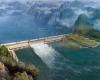
A two-day symposium focused on China’s Three Gorges Dam convened scientists and experts from China and elsewhere for a post-project assessment of the world’s largest hydro dam at the University of California, Berkeley.
Press Release: Three Gorges tourism – boom or bust?
(April 24, 2012) The Three Gorges Dam project was supposed to energize the Three Gorges region but a new study from Probe International reveals the dam is jeopardizing a once spectacular gorges region and water tourist idyll, and has drained the area’s vitality, stability and ecology.
Three Gorges Dam failing: Chinese dam increases risk of earthquakes
(April 20, 2012) A report by the environmental group Probe International shows 20 dams in the upper Yangtze are in seismically active territory. But moving citizens could take some convincing. Those who have been relocated for the Three Gorges Dam have experienced trouble getting settled and finding work.
 Patricia Adams
 Dai Qing
 Fan Xiao
 Lawrence Solomon
 Mu Lan
 Probe International
 Lisa Peryman
 Probe Media
 Other News Sources


 Probe International