
Famed Chinese journalist and environmentalist Dai Qing, on her 70th birthday, reflects on the words of Confucius, who said: “When you’re 70, do as you please, as long as it doesn’t break the rules.” Dai, however, decides she was born 2,500 years too late. “I embody the cultural atmosphere of the ‘People’s Republic,'” she says. “With all its hidden rules.”
China earthquake points to future risk sites
(April 30, 2013) Nature magazine reports that, while scientists agree that China’s deadly tremor at Ya’an (Lushan county) may hint at where future quakes will strike, they disagree on which seismic fault the next rupture is likely to occur.
Are dams triggering China’s earthquakes?
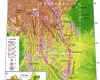
(April 29, 2013) Understanding the forces behind China’s magnitude-7 earthquake in Sichuan Province more than a week ago should sound warning bells. Patricia Adams digs deep into the country’s recent rash of earthquakes in southwestern China and finds the region’s seismic risk is increasingly man-made.
Could dams be causing China’s earthquakes?
(April 24, 2013) Another article exploring the brewing debate over the cause or causes of the April 20 Lushan earthquake reports that the quake may have been an aftershock of Sichuan’s 2008 earthquake disaster, which some experts believe was triggered by the Zipingpu Dam reservoir. This issue of “reservoir-induced seismicity” is fast gaining attention as China, the most dammed nation in the world, is particularly at risk to the phenomenon. A 2011 Chinese study, for example, found China’s massive Three Gorges Dam had triggered around 3,000 earthquakes and numerous landslides in the reservoir region, representing a 30-fold increase in seismic activity in the area.
Sichuan quake highlights dam risk
(April 24, 2013) In regions noted for geological instability, engineering projects built along fault lines are not only vulnerable, but may, in part, be to blame for earthquakes.
Shifting tectonic plates, aftershock, dam-related, or all three?
(April 22, 2013) Experts are debating whether the 7.0-magnitude earthquake that struck Sichuan province over the weekend was an aftershock of the region’s deadly 2008 Wenchuan earthquake – both quakes occurred along the same fault line. Some attribute Saturday’s event to natural movement in the earth’s crust but according to Fan Xiao, chief engineer at the Sichuan Bureau of Geology and Mineral Resources, the Wenchuan quake is also linked to the nearby Zipingpu Dam reservoir. Speaking to the Global Times, Mr. Fan said large reservoirs built on fault lines can induce earthquakes caused by the pressure of massive water volume on a fracture. “A reservoir with a capacity of over 1 billion cubic meters and a dam more than 100 meters tall would have a 30 percent to 40 percent chance of inducing an earthquake,” he said.
Aftershocks from Sichuan earthquake pose threat of secondary disasters
(April 22, 2013) Shockwaves from Saturday’s magnitude-7 earthquake in Sichuan have placed the region on high alert for secondary disasters from landslides and the potential collapse of 54 earthquake-damaged dams, reports South China Morning Post. The coming rains will promote mudslides and threaten the structural integrity of these dams, geologists warn. Already, a state-of-emergency has been declared for five dams and downstream populations have been evacuated. More than 3,000 hydropower engineers and military personnel are now examining every dam in the region but many areas are still inaccessible. Nine nuclear facilities in Sichuan felt shockwaves too, but have not reported any leaking pipes or ruined buildings. As of Sunday night, the region had experienced 1,642 aftershocks.
Chinese media investigates dam link to latest earthquake
(April 22, 2013) China’s “First Financial Daily” investigates the hazards of reservoir-induced seismicity in the wake of the magnitude-7 Lushan earthquake.
Sichuan earthquake may be aftershock of 2008 killer quake: Chinese geologist
(April 22, 2013) China’s construction of huge dams increases the probability of earthquakes, Fan Xiao warns.
Deadly earthquake in China may be aftershock of 2008 Wenchuan quake
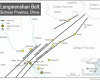
(April 21, 2013) The strong earthquake that struck China’s mountainous Sichuan province Saturday morning may have been an aftershock, says prominent Chinese geologist, Fan Xiao. The accumulation of stress had not yet been fully released, making this region a more dangerous area after the May 2008 Wenchuan earthquake.
Farewell, CIDA

(April 2, 2013) Now-abolished foreign aid pork barrel won’t be missed. Patricia Adams’ epitaph for CIDA.
Netizens against filth
(March 27, 2013) Pollution is once again a dire concern in the wake of China’s formal acknowledgement last month of cancer hotspots, known as “cancer villages,” long speculated to be caused by drinking and irrigation water contaminated by industrial chemicals and heavy metals. More recently, unmanageable garbage sites have posed a threat to Beijing’s drinking water supply. As China’s new leadership moves to clean up the country, citizens still lack access to information that would help them help both their health and their environment but that’s not stopping them from Twittering towards change.
On alert: RIS risk amid rash of earthquakes in China’s Sichuan-Yunnan region
(March 22, 2013) A new report, exclusive to Probe International, calls for urgent monitoring of China’s large dams in areas prone to seismic hazard. These areas may be at increased risk from dam reservoir-induced seismicity (RIS). Scientists have observed that reservoir impoundment may not only increase the risk of strong earthquakes, particularly in areas already vulnerable to high-intensity seismic activity, but may represent a more pronounced risk in the first few years after a dam is filled.
SNC-Lavalin executive reveals illegal political donations before corruption inquiry
(March 15, 2013) A vice-president from SNC-Lavalin, Canada’s largest engineering company, admitted yesterday before Quebec’s Charbonneau inquiry into corruption in public-works contracts, that it organized its employees to make more than $1 million in illegal political donations. While there was no direct link between the donations and a quarter-billion dollars in contracts the firm was awarded by the provincial government, Yves Cadotte insisted, the company did not want to take any chances.
Cyberwar and secrecy threaten China’s dams
(March 12, 2013) China may be the world’s biggest cyberspace aggressor, but security specialists say China’s computer-controlled infrastructure is more vulnerable to cyber-attacks and to malfunctioning domestic software than are Western systems. Read Patricia Adams’ piece in the Huffington Post on why China’s dams are vulnerable to both.
 Patricia Adams
 Dai Qing
 Fan Xiao
 Lawrence Solomon
 Mu Lan
 Probe International
 Lisa Peryman
 Patricia Adams and Lawrence Solomon
 Other News Sources


