(December 18, 2009) Climate change fears are pushing developing countries around the world into funding risky and uneconomic projects. China’s recent announcement that it is planning a massive expansion of its nuclear program is the latest example.
Thinking outside the foreign aid box
(December 18, 2009) Foreign aid is facing more criticism this time from an official at the United Nations Millennium Campaign. According to a recent report in the Guardian UK, Sylvia Mwichuli, the UN millennium campaign communications coordinator, told an audience attending a media workshop that governments in Africa must look for different ways to finance their national budgets, rather than relying on foreign aid.
Charge pool owners more, NGO says
(December 17, 2009) Beijing can save at least 190 million cu m water per year – double the capacity of Guanting Reservoir – if the extravagant lifestyle of its residents can be controlled, a leading NGO said after the water price hearing yesterday.
The GOOD 100: Dambisa Moyo
Dead Aid offers a prescription for African development that doesn’t involve giving away money, but instead proposes a capitalistic approach to enable African nations to tap into the financial markets to their own benefit. By receiving and slowly improving credit ratings and by issuing bonds, while encouraging foreign investment, Moyo argues, African nations can free themselves from a damaged system and grow using the same paradigm that works for developed nations.
Dutch politician asks if aid really aids
(December 11, 2009) Arend Jan Boekestijn’s book deals a new blow to the position of development aid in the Dutch political landscape, which seemed unassailable until recently. For decades, the subject was taboo.
China: A blast from the past
(December 14, 2009) “Unfortunately we live in a system where our unelected leaders push ahead with mad dreams rather than take responsibility after bringing disasters to the ordinary people,” says Dai Qing, a conservationist who has spent time in China’s most notorious political prison for her criticism of government-led environmental destruction. “But perhaps if the leaders really believe their slogans and really decide it’s time to live in harmony with nature, then this will be the last mad mega-project we see in China.”
Group tracks carbon credit trading and issues warning
(December 15, 2009) The Canadian activist group Probe International based in Toronto is arguing that the global carbon credit market is not the environmental panacea it is held out to be and could actually be doing environmental harm.
China: A blast from the past
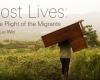
(December 14, 2009) Standing in the rubble of her home, with the sun setting on the graves of her ancestors behind her, Li De breaks down as she describes being relocated to make way for the Chinese government’s latest grand engineering project. Her house in rural Henan province will soon be submerged beneath a reservoir feeding the central route of the biggest water scheme in history – the “south-north water diversion project”.
China’s PR Problem Rears Head at Mekong Forum
(December 12, 2009) Powerful neighbour. A rising power. Old friend. Big, secretive investor. Big boy of the region. These were some of the terms participants at the just-finished Mekong Media Forum here used, when asked to share the images of China they get from the media.
Clear water, big fish
(December 12, 2009) Twenty-three hundred kilometres of transmission lines, to be built by Transelec Chile SA (investors include the CPP Investment Board, the British Columbia Investment Management Corp. and Toronto conglomerate Brookfield Asset Management Inc.), would require the world’s longest clear-cut up through the heart of Patagonia’s untouched temperate forests.
Fortis, activists clash over Belize dam
(December 12, 2009) The situation on the Macal River in Belize is murky. Downstream from the Chalillo dam owned by Belize Electric, which is in turn owned by St. John’s-based Fortis Inc., the river is filled with silt, turning it the colour of chocolate milk.
UN has second thoughts about giving carbon credits to China’s wind farms
(December 11, 2009) Recent reports say that a United Nations committee has stopped giving carbon credits to developers of wind energy projects in China, citing concerns that the projects qualified for the credits unfairly. The UN is concerned that the Chinese government lowered its subsidies to wind farms so they would qualify for carbon credits through the UN’s Clean Development Mechanism (CDM).
Canadians funding destruction of Patagonia forests
(December 9, 2009) A recent article in Pique highlights concerns about the involvement of the Canadian-owned company Transelec in a hydro electric project in Chile’s Patagonia region. The project, which plans to build five dams and 2,300 km of transmission lines with a parallel highway that would pass through 14 legally protected natural areas, has been criticized by environmentalists in the country and around the world, as well as business leaders.
Carbon Credit fraud causes more than 5 billion euros damage for European Taxpayer
(December 9, 2009) The European Union (EU) Emission Trading System (ETS) has been the victim of fraudulent traders in the past 18 months. This resulted in losses of approximately 5 billion euros for several national tax revenues. It is estimated that in some countries, up to 90% of the whole market volume was caused by fraudulent activities.
Migrants bear sacrifice for China’s south-north water diversion project
(December 9, 2009) More than 760 residents of Junxian County in the Danjiangkou Reservoir area on Tuesday began new lives 300 km away with uncertainty and hope. They were among 330,000 migrants expected to be relocated by 2014 for the multi-million-dollar project, which is designed to channel water from southern regions, mainly the Yangtze, China’s longest river, to the arid north, including Beijing.