
(October 21, 2013) Scientists are using medical technology to study the endangered Yangtze finless porpoise and their critical sense of hearing, used for navigation, to understand how these mammals are managing in the very busy and loud waters of China’s high-traffic Yangtze River. “In a noisy environment, they’d have a hard time hearing their prey or their friend. It makes it more difficult for them to conduct basic biological activities such as foraging, communicating, and navigating in the river,” said biologist and lead author of the survey, Aran Mooney.
All dried up
(October 12, 2013) This Economist report looks at the gravity of China’s water crisis, once summed up by Wang Shucheng, a former water minister as: “To fight for every drop of water or die: that is the challenge facing China.”
Three Gorges Dam trashes Yangtze, images show
(July 19, 2013) Images show the ugly side of China’s grand dam and its effects on the country’s beloved Yangtze River: rubbish crusts, floating islands of garbage — a plague of filth and issues that exacerbate existing problems and introduce new dangers. Policymic.com reports.
Flow test for water project gets underway
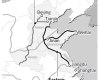
(May 31, 2013) The process of diverting water from the Yangtze River through the eastern route of China’s massive South-to-North Water Diversion Project began this week after 11 years since construction began. Although the water diversion intended for drought-prone cities in China’s arid northern regions “will enrich the water supply in the north, its impact on the ecosystem is irreversible,” said Ma Jun, an environmentalist.
China surveys Yangtze dolphin as extinction looms

(November 30, 2012) Chinese scientists have begun an expedition to count how many endangered finless porpoise remain in the Yangtze River. A similar survey in 2006 found only 1,800 of the animals, considered a national treasure, as well as a symbol of the mighty river itself and a reflection of the great waterway’s health.
Climate change a dam smokescreen?

(November 20, 2012) Poyang, China’s largest freshwater lake, is experiencing a dramatic drop in water levels as a result of drought exacerbated by the effects of ongoing climate change — a dry-up that began in earnest in 2003, according to a report published by China’s state-run Xinhua news agency earlier this year. What the report doesn’t acknowledge is that 2003 also coincides with the year reservoir filling began at the Three Gorges mega-dam 500-km upstream of Poyang, on the Yangtze River. Responding separately to Xinhua’s claims, noted Chinese geologist and environmentalist Fan Xiao points to operations at the dam, as well as rapid development of the Yangtze’s upper reaches, as the culprits behind the distressing changes Poyang and other Yangtze tributaries are experiencing: expect worse, he warns, but not because of climate change.
Whitewashing the Three Gorges Dam
(October 15, 2012) Lauded by Chinese officialdom as a symbol of its growing might, the Three Gorges Dam had already been in operation for eight years when the Three Gorges Corporation issued its first-ever corporate social responsibility report. The release of the CSR report coincided with a wave of heightened concern surrounding the dam’s failings and impacts, and a rare admission by China’s State Council that all was not well with the jewel in its crown of modernity. A commentary by Li Tie at the time, published by China’s respected South Weekend, described the Corporation’s document as awash in insipid content” and exactly not what the public needed, which was honesty. Li even went so far as to say reports that did not respond honestly to widespread concerns, in effect, posed a threat to the nation’s social stability, leaving Chinese citizens more likely to place their faith in the country’s rumor mill than official documents they could not trust. Li’s misgivings appear to have only gained in resonance this year, as China’s recent summer of protest bears out.
Red Yangtze

(September 17, 2012) China’s famed golden waterway turns a disturbing red in the southwest region’s largest industrial centre. Speculation as to why runs the gamut from industrial dye dumps to an omen of biblical doom.
Unchecked industry reduces land of a thousand lakes to a struggling few
(July 20, 2012) Lakes in large number, once a plentiful distinction for the province of Hubei, are vanishing after years of “growth” without rule of law.
China’s new mega-dam is a mega-problem
(July 12, 2012) Almost 20 years in the making, China’s Three Gorges mega-dam was declared complete on July 4 when the last of its 32 generators went online, 10 years after the first turbine went into operation. There is no end in sight, however, for costs associated with the vast and controversial project, which remains closer to disaster than triumph.
Dam fever threatens viability of Three Gorges Dam

(June 6, 2012) Reporter Shi Jiangtao sounds the alarm on China’s dam-building frenzy along the upper reaches of the Yangtze River, revisiting the findings of the 2011 Probe International study, “A Mighty River Runs Dry,” by geologist Fan Xiao.
A new threat to safety along the Yangtze River
![The Jinsha River flows through Qinghai, Sichuan and Yunnan provinces in southwest China. [File photo]](https://journal.probeinternational.org/wp-content/uploads/2012/05/jinshuariver.jpg?w=100&h=80&crop=1)
(May 11, 2012) Chinese hydropower magnates plan to build 25 new dam reservoirs on the Yangtze’s upper reaches despite warnings of seismic risks from dam-building overload in the area, and in spite of recent evacuation efforts due to the threat of geological disaster at Three Gorges.
Press Release: Three Gorges tourism – boom or bust?
(April 24, 2012) The Three Gorges Dam project was supposed to energize the Three Gorges region but a new study from Probe International reveals the dam is jeopardizing a once spectacular gorges region and water tourist idyll, and has drained the area’s vitality, stability and ecology.
A litany of troubles at Three Gorges Dam
To most observers, Chinese officialdom has supported the Three Gorges Dam without fail. But a closer look reveals growing worries about the dam which has become a symbol of all that is wrong with China’s rise. Here we present Chinese officials’ admissions of problems at Three Gorges, from the sensational mea culpas of senior officials to the subtly expressed worries of eminent scientists.
Dams gone wrong: Is danger lurking in China’s dams?
(August 24, 2011) One of China’s premier investigative news agencies reveals China’s dams “are like ticking time bombs:” beset by disaster, flaws, poor construction, neglect, and fraud.



 Probe International