
(April 1, 2014) A magnitude-4.7 earthquake hit Zigui county in central China’s Hubei Province last Sunday, around 23 kilometres from the Three Gorges Dam site location, several days after a magnitude-4.3 tremor was felt early Thursday morning about 30 kilometres from the dam. Authorities say the dam was not affected but they are monitoring the situation. There have been no reports of casualties or property damage, although news coverage has noted an increase in Chinese experts who support the speculation that the project itself is the cause of local seismic activity.
Three Gorges Dam not affected by tremor
(March 28, 2014) Once again, an earthquake has hit the Three Gorges reservoir area and dam officials are reassuring the public that the world’s largest hydropower plant is operating normally. The epicenter of a 4.3-magnitude earthquake struck Zigui County, just 30 km from the Three Gorges Dam at 12:20 a.m. March 27, 2014. Stay tuned while Probe International investigates the cause and effect of this latest tremor.
Jinping-I Dam impoundment linked to earthquakes
(February 3, 2014) Chinese geologist Fan Xiao investigates once again if the impoundment of a large dam reservoir triggered a series of earthquakes in the seismically active southwest region of China? Based on data collected by China Seismic Information (CSI), Mr. Fan says, ‘Yes’. Not only were the November 22, 2013, seismic events recorded in Sichuan, China not naturally occurring or isolated incidents, he says the region should prepare for stronger, “even destructive earthquakes” as a result of further impoundment.
Chinese geologist links recent Badong County quake to Three Gorges Dam
(December 20, 2013) High-profile Chinese geologist Fan Xiao — and the author of several reports for Probe International — notes with interest the rush by China’s state media, and the country’s official seismological agency, to dismiss a link between the 5.1-magnitude Badong County earthquake on Monday and the Three Gorges Dam reservoir. A dismissal that runs contrary to common sense and the basic facts of seismic analysis, says Mr. Fan, who believes reservoir-induced-seismicity (RIS), triggered by impoundment of the massive dam, was likely behind the recent quake and could induce stronger earthquakes in the region.
5.1-magnitude earthquake strikes Three Gorges Dam region
(December 16, 2013) A 5.1-magnitude earthquake struck a mountainous and populous area of China’s Hubei Province today, 100 kilometres from the Three Gorges Dam site. Officials have been quick to reassure the public that the dam has remained intact and is operating normally after the event, which occurred at 1:04 p.m. in Enshi Tujia and Miao Autonomous Prefecture, Badong County. Aftershocks and quake-triggered landslides are expected. What more could there be to this story?
Massive new dams remind China of human price of ‘tofu constructions’
(July 20, 2013) China is on the cusp of another dam-building binge. Nowhere is the aggressive dam push raising more eyebrows than in the country’s southwest. Last year, a report by the environmental group Probe International said of the 130 proposed dams on rivers in the region, nearly 50 per cent “are located in zones of high to very high seismic hazard.”
The problem with environmental impact assessments – continued
(June 3, 2013) News that an environmental impact assessment (EIA) for China’s tallest dam was approved last month by the Ministry of Environmental Protection is a signal that developers and politicians in China understand well the green-washing power of EIAs to move forward destructive projects.
The landslide story
(May 22, 2013) Chinese experts in landslide and geohazard protection fear debris flows, triggered by an epic 2008 earthquake in Sichuan Province, may pose a threat to the region for two decades. A tremendous amount of loose material from the landslides is suspended on hillslopes, ready to be washed away by rain. The potential for ongoing landslides and secondary hazards, such as flooding and blocked rivers, they argue, warrants further investigation.
China earthquake points to future risk sites
(April 30, 2013) Nature magazine reports that, while scientists agree that China’s deadly tremor at Ya’an (Lushan county) may hint at where future quakes will strike, they disagree on which seismic fault the next rupture is likely to occur.
Are dams triggering China’s earthquakes?
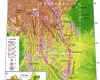
(April 29, 2013) Understanding the forces behind China’s magnitude-7 earthquake in Sichuan Province more than a week ago should sound warning bells. Patricia Adams digs deep into the country’s recent rash of earthquakes in southwestern China and finds the region’s seismic risk is increasingly man-made.
Could dams be causing China’s earthquakes?
(April 24, 2013) Another article exploring the brewing debate over the cause or causes of the April 20 Lushan earthquake reports that the quake may have been an aftershock of Sichuan’s 2008 earthquake disaster, which some experts believe was triggered by the Zipingpu Dam reservoir. This issue of “reservoir-induced seismicity” is fast gaining attention as China, the most dammed nation in the world, is particularly at risk to the phenomenon. A 2011 Chinese study, for example, found China’s massive Three Gorges Dam had triggered around 3,000 earthquakes and numerous landslides in the reservoir region, representing a 30-fold increase in seismic activity in the area.
Sichuan quake highlights dam risk
(April 24, 2013) In regions noted for geological instability, engineering projects built along fault lines are not only vulnerable, but may, in part, be to blame for earthquakes.
Shifting tectonic plates, aftershock, dam-related, or all three?
(April 22, 2013) Experts are debating whether the 7.0-magnitude earthquake that struck Sichuan province over the weekend was an aftershock of the region’s deadly 2008 Wenchuan earthquake – both quakes occurred along the same fault line. Some attribute Saturday’s event to natural movement in the earth’s crust but according to Fan Xiao, chief engineer at the Sichuan Bureau of Geology and Mineral Resources, the Wenchuan quake is also linked to the nearby Zipingpu Dam reservoir. Speaking to the Global Times, Mr. Fan said large reservoirs built on fault lines can induce earthquakes caused by the pressure of massive water volume on a fracture. “A reservoir with a capacity of over 1 billion cubic meters and a dam more than 100 meters tall would have a 30 percent to 40 percent chance of inducing an earthquake,” he said.
Aftershocks from Sichuan earthquake pose threat of secondary disasters
(April 22, 2013) Shockwaves from Saturday’s magnitude-7 earthquake in Sichuan have placed the region on high alert for secondary disasters from landslides and the potential collapse of 54 earthquake-damaged dams, reports South China Morning Post. The coming rains will promote mudslides and threaten the structural integrity of these dams, geologists warn. Already, a state-of-emergency has been declared for five dams and downstream populations have been evacuated. More than 3,000 hydropower engineers and military personnel are now examining every dam in the region but many areas are still inaccessible. Nine nuclear facilities in Sichuan felt shockwaves too, but have not reported any leaking pipes or ruined buildings. As of Sunday night, the region had experienced 1,642 aftershocks.
Chinese media investigates dam link to latest earthquake
(April 22, 2013) China’s “First Financial Daily” investigates the hazards of reservoir-induced seismicity in the wake of the magnitude-7 Lushan earthquake.



 Probe International