
(October 20, 2009) The global economic crisis has once again raised the issue of the sovereign debt of countries in the developing world. Sean Brooks from the Save Darfur Coalition talks about the current debt crisis facing Sudan, and what can be done about it.
Why all the “Howling” about Sudan’s debt?
(October 16, 2009) Mr. Badawi in his recent post “Indebted to the Save Darfur Coalition?” plays loose with the numbers and the definition of Sudan’s “odious” debt. In addition, he mischaracterizes the objectives of the Save Darfur Coalition’s position related to how the international community should deal with Sudan’s debt crisis and ignores the coalition’s support thus far of the Obama Administration’s engagement strategy with Khartoum.
Dambisa Moyo on the CBC
(October 15, 2009) Dambisa Moyo, author of Dead Aid, talks to the CBC about finding new and more innovative ways to help residents in the developing world. Moyo argues that the aid model of institutions such as the World Bank have helped to stifle economic growth in the developing world.
Save Darfur Coalition wants US to fight debt relief to Sudan
(October 7, 2009) The US-based Save Darfur Coalition is making a new push to deny debt relief to Sudan. The activists are aiming to counter lobbying by Sudan at the annual meetings of the International Monetary Fund (IMF) and World Bank held this past week in Istanbul, Turkey.
Breaking the myth of aid. Dambisa Moyo’s remedies
(September 30, 2009) Aid, argues Dambisa Moyo, does not eradicate some of Africa’s first rank scourges such as civil wars and corruption. Quite the reverse: development aid encourages corruption and allows some regimes to stay in place artificially. Because of the significant amounts that aid invests, it triggers envy and can stir up ethnic tensions, which sometimes lead to civil wars.
More money, more problems: The World Bank’s way
(September 25, 2009) In the wake of recent financial crisis, the World Bank called on the developed world to drastically increase lending to developing nations. Robert Zoellick and company say that countries in Africa and other parts of the developing world need this money to combat rising levels of poverty and an economic collapse.
Finance Ministry urges China to write off Iraqi debt
(September 2, 2009) The Iraqi Ministry of Finance has called on the Chinese government to cancel the Iraqi debt, totaling $8.5 billion U.S. dollars, according to a ministry statement.
Interview with Dambisa Moyo
(July 20, 2009) Dambisa Moyo, economist and author of Dead Aid, discussing problems of foreign aid to the developing world. Moyo believes that pouring more aid into the coffers of African governments will do nothing to promote healthy economic growth. Instead, she calls for an opening of global trade, lower tariffs and a functioning tax system.
The Gr8 Escape: The G8 is doing very little to help Africa
(July 17, 2009) Foreign aid is again in the spotlight after the recent G8 meeting in L’Aquila, Italy. One area that garnered particular attention from the media was the decision by G8 leaders to increase aid to Africa for food security and agricultural development to $20-billion-a 33% increase from the previously promised $15-billion.
EU was world’s largest aid donor in 2008
(July 13, 2009) The European Union said Friday that it was the world’s biggest aid donor last year, spending euro 12 billion (US$16.7 billion) on poorer nations – or about 60 percent of all global aid.
IMF, World Bank & Lending Institutions: Agents Promoting Poverty or Development?
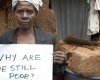
(July 6, 2009) According to The World Bank, it is, “a vital source of financial and technical assistance to developing countries around the world.
We are Tired of the Dictatorship and Corruption

(July 6, 2009) Protest Letter to the Politicians and Governments in Africa.
Ghana’s Oil, Will the People Benefit?

(July 6, 2009) Much has been said about Ghana’s oil and the revenue that is supposed to flow into her coffers by 2010.
Experts on Zimbabwe’s external debt
(July 5, 2009) Stakeholders met last week in Harare to discuss Zimbabwe’s external debt, which threatens the welfare of its citizens who have been ravaged by a deep social, economic and political crisis.
Reject odious debt: Senator
(July 4, 2009) Senator Obert Gutu, a legislator from Prime Minsiter Morgan Tsvangirai’s MDC party has called for an audit of the country’s debt, insisting that long-suffering tax-payers should not be made to pay for the actions of greedy and irresponsible politicians and government officials.
 Patricia Adams
 Dai Qing
 Fan Xiao
 Lawrence Solomon
 Mu Lan
 Probe International
 Lisa Peryman
 Probe Media
 Other News Sources


 Probe International