
(July 20, 2009) Dambisa Moyo, economist and author of Dead Aid, discussing problems of foreign aid to the developing world. Moyo believes that pouring more aid into the coffers of African governments will do nothing to promote healthy economic growth. Instead, she calls for an opening of global trade, lower tariffs and a functioning tax system.
The Gr8 Escape: The G8 is doing very little to help Africa
(July 17, 2009) Foreign aid is again in the spotlight after the recent G8 meeting in L’Aquila, Italy. One area that garnered particular attention from the media was the decision by G8 leaders to increase aid to Africa for food security and agricultural development to $20-billion-a 33% increase from the previously promised $15-billion.
IMF, World Bank & Lending Institutions: Agents Promoting Poverty or Development?
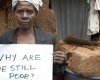
(July 6, 2009) According to The World Bank, it is, “a vital source of financial and technical assistance to developing countries around the world.
We are Tired of the Dictatorship and Corruption

(July 6, 2009) Protest Letter to the Politicians and Governments in Africa.
Ghana’s Oil, Will the People Benefit?

(July 6, 2009) Much has been said about Ghana’s oil and the revenue that is supposed to flow into her coffers by 2010.
Experts on Zimbabwe’s external debt
(July 5, 2009) Stakeholders met last week in Harare to discuss Zimbabwe’s external debt, which threatens the welfare of its citizens who have been ravaged by a deep social, economic and political crisis.
Reject odious debt: Senator
(July 4, 2009) Senator Obert Gutu, a legislator from Prime Minsiter Morgan Tsvangirai’s MDC party has called for an audit of the country’s debt, insisting that long-suffering tax-payers should not be made to pay for the actions of greedy and irresponsible politicians and government officials.
Zimbabwe: the case for a debt audit
(July 2, 2009) The unpalatable fact is that the Republic of Zimbabwe is virtually bankrupt. As at December 1 2008, Zimbabwe’s external debt stood at US$5, 255 billion, with a current account balance of US$597 million.
Changing Times Online
(July 1, 2009) The Prime Minister, Hon. Morgan Tsvangirai has endorsed the move taken by MDC ministers in boycotting yesterday’s cabinet meeting as he understands their frustrations and concerns over the delays in the full implementation of the Global Political Agreement (GPA).
Iraq seeks forgiveness of Saddam Hussein’s “odious” debts
(June 21, 2009) Iraq will continue to press its neighbours and the world to forgive billions of dollars in debt accured by former Iraqi president Saddam Hussein, an Iraqi lawmaker said Sunday.
Nigerian government gets caught with its hand in the World Bank cookie jar
(June 19, 2009). As the World Bank and the IMF drastically increase lending to countries in the developing world, local politicians are beginning to question the loans. The Conference of Nigeria Political Parties (CNNP) recently expressed outrage over the ruling People’s Democratic Party plan to obtain a $1-billion loan from the World Bank.
World Bank seeks to increase lending to the developing world
(June 15, 2009) As the economic crisis continues to work its way through the global economic system, the World Bank is using the slowdown as an opportunity to increase lending to the developing world. According to the bank’s president, Robert Zoellick, the bank will increase its lending by $100 billion over the next three years. In 2009 alone, the bank plans to triple its lending from $13.5-billion to $35-billion.
Treasuries are out, Iraq debt is in
(June 12, 2009) The portfolio manager of Templeton Global Bond Fund, Michael Hasenstab, says he’s investing in Iraqi bonds rather than treasuries, U.K. gilts or Japanese bonds. He believes the massive amount of debt occured by the U.S. and other governments over the past year will drive up inflation, weaken their currencies and hamper economic growth.
Omar Bongo, the last of Africa’s “Big Men”, dies at the age of 73
(June 9, 2009) Gabon’s President Omar Bongo – the world’s longest-serving president – died today in a hospital in Barcelona, Spain. Mr. Bongo leaves behind a political legacy marred by corruption and patronage – marking a throwback to an era when Africa was ruled by “Big Men.”
Multinational corporations: The new colonisers in Africa
(June 6, 2009) Before the end of the first period of colonialism African nations were properties of their colonial masters who did what they could to rape the continent of whatever resource they deemed good for the development of their citizens in Europe. Out of nowhere and without any consultation with the people of the African continent, the Europeans met and divided the continent amongst themselves in what has been termed ‘The Scramble for Africa’.
 Patricia Adams
 Dai Qing
 Fan Xiao
 Lawrence Solomon
 Mu Lan
 Probe International
 Lisa Peryman
 Probe Media
 Other News Sources


 Probe International