
(October 22, 2011) The recent suspension of the Myitsone dam in Myanmar shows just how unpopular China’s international dam-builders are becoming. In recent years, China has built a spate of new hydropower projects on rivers outside its borders, without much concern for their ecological and economic impacts downstream. Myitsone is a sign of growing resistance to these projects.

Other News Sources
Money can’t solve China’s water woes
(October 21, 2011) China’s officials have admitted that the nation’s water supplies are dangerously polluted, and pledged to spend four trillion yuan on water conservation projects over the next decade. But money isn’t the problem; despite hundreds of billions of yuan already spent, pollution is only getting worse.
Brazilian judge blocks Belo Monte dam
A Brazilian judge has stopped construction on the world’s third largest dam. The Belo Monte dam on the Xingu River in the Amazon would flood about 500 square kilometres – displacing about 20 000 indigenous people – as well as diverting 80% of the Xingu’s flow. This Environment News Service article details the long and tortuous battles the Brazilian courts, government and indigenous peoples have fought over the project.
China’s urban groundwater: in a bad way
(October 20, 2011) A report released Wednesday by the Ministry of Land and Resources showed that the quality of over half of the underground water in China’s urban areas was classified as bad in 2010.
China’s hydropower output drops
(October 20, 2011) Two recent reports show that China’s hydropower output has fallen drastically over the past year, as decreased runoff from major rivers has led to falling reservoir levels in China’s major dams. The Bureau of Statistics stated that hydropower output was one-fifth lower than last September, while the National Development and Reform Commission measured a decrease of 24.5% – a loss of nearly a quarter.
Official Chinese land grabs
(October 19, 2011) Local governments in China typically fund themselves by land sales and property taxes. This article, from Economic Observer, surveys how the economies of Beijing, Shaanxi, Tianjin and Hubei fared over the past year. Notably, Beijing’s economy slowed due to restrictions on real estate and vehicle purchasing – major parts of local consumption and tax revenue.
Environmental Hot Docs from China

(October 19, 2011) Independent documentary film plays a particularly critical role in a country lacking freedom of speech. Because the Chinese government is hiding the damage done to China’s environment by two decades of economic growth, citizens are taking up the job using film to expose the trade-offs between the environment and the economy, and the effect this is having on Chinese citizens and society at large.
Worries about water quality at source of diversion
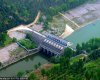
(October 18, 2011) From next year on, water quality will become a form of criteria used to evaluate the performance of local officials in Xichuan county of central China’s Henan province. The whole range of ecological indices to be adopted for official evaluation include the quality of water entering Xichuan, the establishment of tree plantations, the control of soil erosion and treatment of garbage and waste water, as well as the number of polluting enterprises that have been shut down.
China’s power growth slows
In China, hydroelectric output dropped by 20% from a year earlier. Authorities are now warning of winter power shortages in hydropower-rich southern and central regions due to low water storage, leading to questions about the reliability of China’s hydropower assets.
Beijing’s water regulations
(October 18, 2011) The Miyun Reservoir happens to be the major water supply for Beijing and the county is an important ecological shield. To protect the ecology of the area, no major industrial projects have been allowed in and around the Miyun area. In addition, farmers who live upstream from the reservoir are not allowed to use chemicals and fertilizers in crop production. So says China Daily.
A litany of troubles at Three Gorges Dam
To most observers, Chinese officialdom has supported the Three Gorges Dam without fail. But a closer look reveals growing worries about the dam which has become a symbol of all that is wrong with China’s rise. Here we present Chinese officials’ admissions of problems at Three Gorges, from the sensational mea culpas of senior officials to the subtly expressed worries of eminent scientists.
Joy amid caution as Burmese halt Chinese mega-dam
(October 8, 2011) The Burmese president announced that the controversial Chinese-financed Myitsone dam on the Irrawaddy River would be suspended. Now the Chinese government is threatening legal action if the rights and interests of its state enterprises aren’t protected.
In Wenchuan, geological risks continue
Three years after the devastating 2008 Sichuan earthquake, geologist Yang Yong investigates the proliferation of hastily approved mining and industry projects putting the area at risk of further geological disasters.
China’s air pollution problem
Patricia Adams of Probe International says worse things are happening to China’s air than increased CO2 emissions: “Nitrogen oxides and mercury are also emitted when hydrocarbons are burned and those emissions are truly troubling.”
China’s golf mania grows
(October 6, 2011) Golf, the “green opium”, is getting more and more popular in China as a symbol of wealth. New courses continue to be built, despite an official ban, exacerbating China’s urban water shortages.
 Patricia Adams
 Dai Qing
 Fan Xiao
 Lawrence Solomon
 Mu Lan
 Probe International
 Lisa Peryman
 Probe Media
 Other News Sources


 Probe International