
Journalist Sharron Lovell’s gallery of striking images portray the losing end of China’s massive water transfer scheme to alleviate some by taking from others.


Journalist Sharron Lovell’s gallery of striking images portray the losing end of China’s massive water transfer scheme to alleviate some by taking from others.

Green Beanery, our coffee business and the social enterprise arm of Probe International, introduced coffee from China to our inventory last month. Supplied by the Xinzhai Coffee Co-op, this close-range look provides a fascinating snapshot of the growers behind our Yunnan Coffee selection – China’s first crop of farming entrepreneurs.
China’s push to replace petrol-engine cars with electric vehicles powered by coal-fired grids fuels fears of worsening pollution problem as the country’s switch to cleaner energy lags behind its “green” car market.
Cutting CO2 emissions and economic growth are incompatible. The Chinese know it, whatever they said and signed in Paris. This article for the South African Independent Newspapers group highlights the recent Probe International study “The Truth about China” by Patricia Adams.
Institutional weakness isn’t as exciting a topic as evil dictators or heroic protesters — but it’s far more important, writes former human rights lawyer Amanda Taub for Vox Media.
China is staring economic stagnation in the face and the ruling Chinese Communist Party is panicking. The segment of society the CCP fears most – its younger people with their Internet capability and changing political and cultural outlook – represent a critical demographic the Party finds itself increasingly beholden to. Foreign Affairs reports.
After 14 long years, the state government has made its first move to blacklist the SNC-Lavalin company by issuing show-cause notices to it.
China’s leaders, we are told, are leading us to planetary carbon salvation. For a reality check, consult a new report by Patricia Adams, the executive director of Probe International. Tom Switzer for the Sydney Morning Herald.
Is there a coherent foreign policy strategy behind the huge sums of money the Trudeau administration has been quick to pledge in foreign aid spending since taking office or is the government’s foreign aid focus more a reactionary stance to what the Conservatives did or did not do?
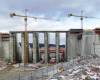
The Muskrat Falls hydroelectric project in Labrador needed a federal guarantee to get off the ground, which in itself testifies to its iffy economics, writes Konrad Yakabuski for the Globe and Mail. Now, he says, Newfoundland’s shrinking population faces paying for Muskrat Falls in more ways than one.
Haitians know how to fish but they need access to a boat buoyed by property rights, rule of law and greater access to world markets. Nevertheless, some bright spots have emerged in a move away from the “over-aid” model: mangoes and the reopening of a wheat flour mill destroyed by the 2010 earthquake.
So far, all the pledges from all the countries put together would scarcely budge the needle on the great big global thermostat. This opinion piece for the Globe and Mail quotes Probe International’s new study on China’s climate policy and energy needs.
As President Xi’s crackdown on dissent continues, China’s most prominent human rights lawyer awaits sentencing on the “vague charges” leveled against him. Meanwhile, many of the 200 human rights lawyers authorities rounded up in July, in a major nationwide sweep, remain behind bars. The Los Angeles Times reports.
Beijing’s first “red alert” raises an even more important question about the veracity of Chinese data on, not only the environment, but economic growth and other vital statistics. Minxin Pei reports for Nikkei Asian Review.
Writers can help the world adjust to impossible facts and injured societies to heal but, for Chinese writers, censorship makes exploring “the fate of humanistic values in post-Mao society” problematic. How can authors be candid and avoid punishment?



 Patricia Adams
 Dai Qing
 Fan Xiao
 Lawrence Solomon
 Mu Lan
 Probe International
 Lisa Peryman
 Probe Media
 Other News Sources
 Probe International