
Despite the CCP’s efforts to erase the events of 1989 from the public consciousness, Tiananmen Square continues to symbolize the struggle for human rights and democracy in the face of authoritarian rule.
By Ye Bing | Published by Voice of America | Summary edited by Probe International
Summary
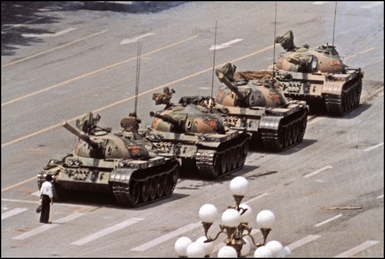
The events of the 1989 Tiananmen Square protests and the subsequent crackdown by the Chinese government remain a highly sensitive and controversial topic without a public voice in China.
The CCP’s strict censorship policy regarding the events of 1989 make it difficult for younger generations to access accurate information about the protests and their aftermath. This has led to a lack of discussion, understanding and opinion in Chinese society about what happened and why.
Responsibility for the Tiananmen crackdown, the actions of student leaders, and the broader implications for China’s political trajectory is complex and multifaceted.
Critics of the 1989 student movement argue that the protesters’ refusal to compromise or evacuate Tiananmen Square led to the violent suppression that followed. Students’ actions, they suggest, may have inadvertently played into the hands of hardliners within the Chinese Communist Party (CCP), leading to the tragic events of June 4 and the loss of an opportunity for reform. Some have even gone as far as to blame student leaders for the violence that ensued.
Supporters of the student movement argue that the demands made by students were reasonable and moderate. Students, they point out, were calling for dialogue with the government, an end to corruption, and greater political freedoms—goals that were not inherently radical. They also emphasize that the government’s use of lethal force against unarmed civilians was a disproportionate response, regardless of students’ actions.
Would China have pursued a path of political reform similar to that of other countries, had the events of 1989 unfolded differently? Some argue the crackdown set back that possibility and led to a consolidation of power by the CCP and a focus on economic development at the expense of political freedoms.
Ultimately, the events of 1989 and their interpretation are deeply entangled with the ongoing struggle for political reform and human rights in China. The debate over the responsibility for the Tiananmen crackdown and its consequences is likely to continue as long as the issues of freedom and democracy remain unresolved.
This analysis also looks at the 2019-2020 Hong Kong protests and the ongoing relevance of the lessons from 1989 for contemporary pro-democracy movements. The ability to learn from history and to apply those lessons in new contexts is crucial to understanding the dynamics of political movements and the challenges of achieving democratic change in authoritarian contexts.
Read the full article at the publisher’s website here
Further Reading
Tiananmen killings: Were the media right?
By James Miles | Published by the BBC
This article by James Miles, the BBC’s Beijing correspondent at the time, offers a firsthand account of the challenges in reporting the events of 1989 in Tiananmen Square and the nuances that have emerged in the historical understanding of what transpired. Miles argues that while there was indiscriminate firing and casualties in the vicinity of Tiananmen Square, the actual square itself may not have been the site of a massacre as initially reported. Instead, he says, the violence was more widespread across Beijing, with significant casualties occurring on Chang’an Boulevard and other areas as the military moved to quell the protests.
He writes:
There was no Tiananmen Square massacre, but there was a Beijing massacre. The shorthand we often use of the “Tiananmen Square protests” of 1989 gives the impression that this was just a Beijing issue. It was not. Protests occurred in almost every city in China (even in a town on the edge of the Gobi desert). What happened in 1989 was by far the most widespread pro-democracy upheaval in communist China’s history. It was also by far the bloodiest suppression of peaceful dissent.
Despite challenges in reporting and the CCP’s subsequent censorship, the events of 1989 remain a critical moment in the history of the pro-democracy movement in China. Miles’ hope is that the government will eventually revise its official account, a reflection he says of a broader desire for reconciliation and a more open discussion of the country’s recent past.
Read the full article at the publisher’s website here
The man in front of the tank: How journalists smuggled out the iconic Tiananmen Square photo
By Mike Chinoy and Jessie Yeung | Published by CNN
“To this day, we don’t know who the man is and what happened to him. But he remains a powerful symbol of the individual standing up to the power of the state.” How Tiananmen’s “tank man” image made its way into the global consciousness.
Read the full article at the publisher’s website here
Categories: Rule of Law, Security
 Patricia Adams
 Dai Qing
 Fan Xiao
 Lawrence Solomon
 Mu Lan
 Probe International
 Lisa Peryman
 Probe Media
 Other News Sources


 Probe International
1 reply »